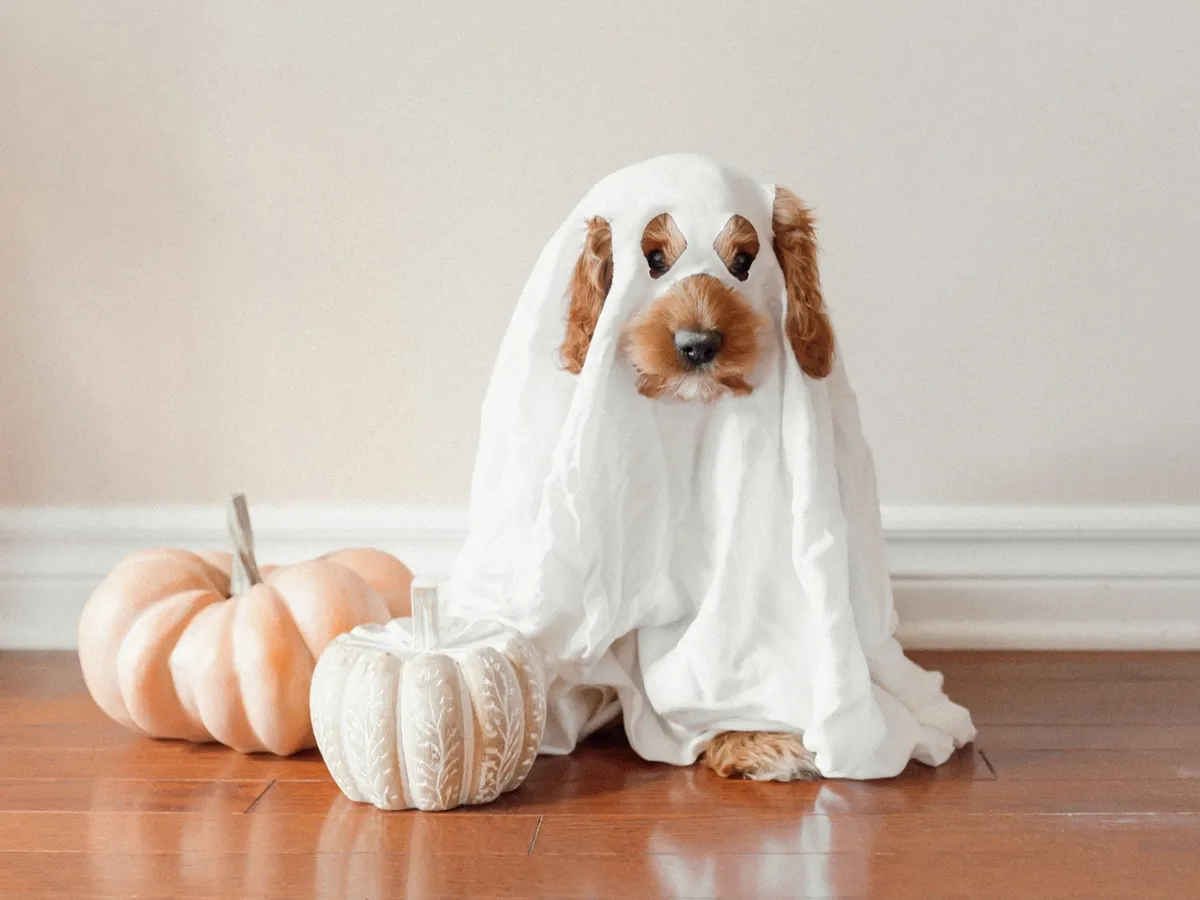
New Year’s Eve fireworks: how to prepare your dog (and your cat)
Published October 26, 2026 · Updated November 16, 2026
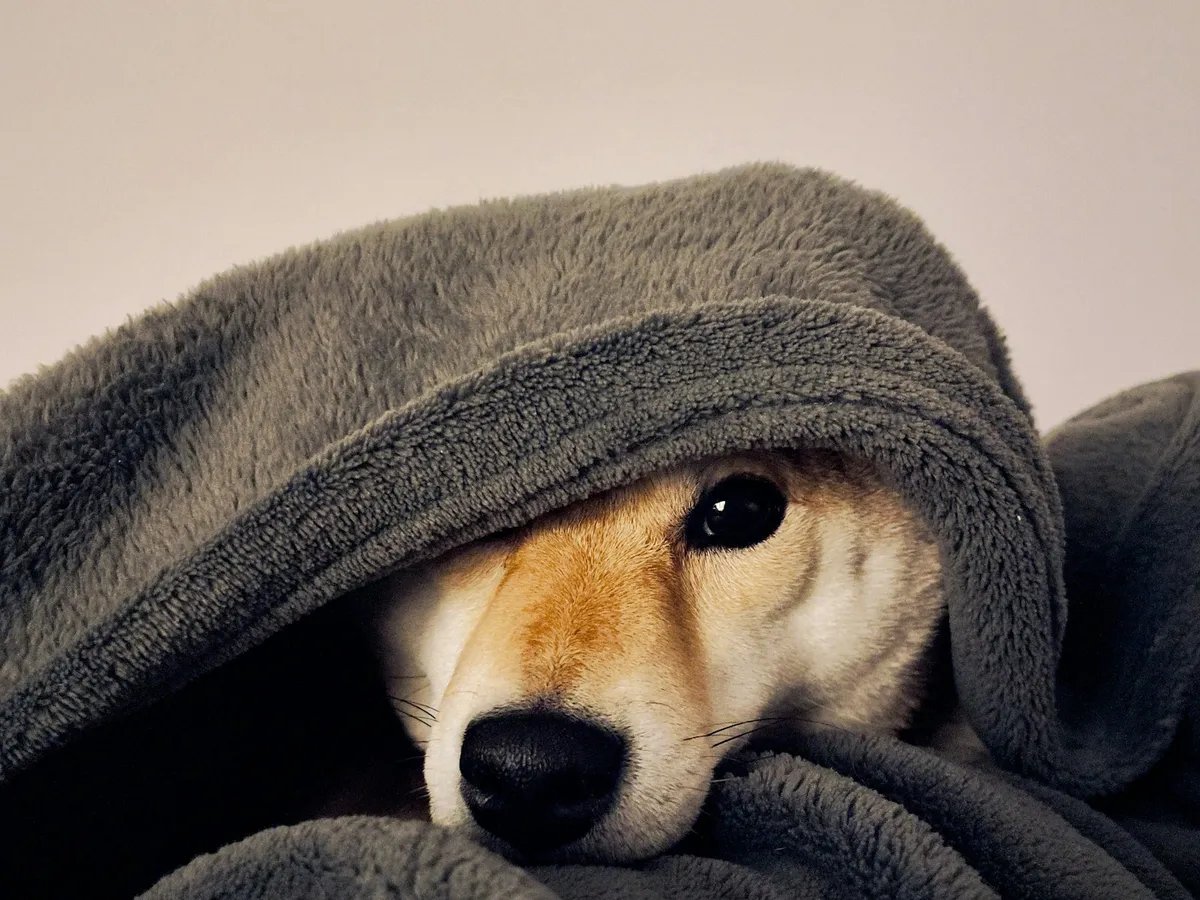
In short : Take a long walk in the afternoon, use a leash in the evening and check their ID tag. Set up a quiet room with a hideout and familiar background sound, give them something to do and stay calmly by their side.
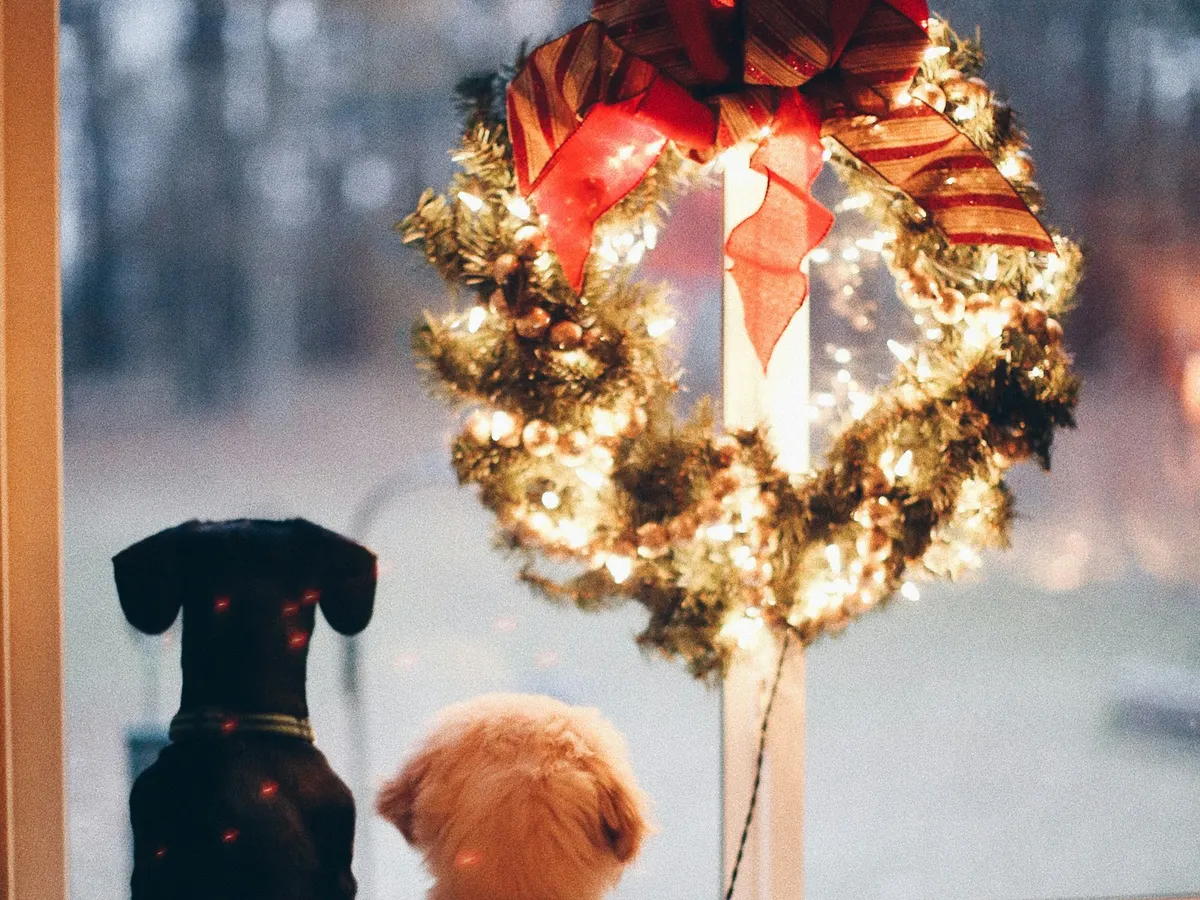
At midnight on December 31, fireworks, firecrackers and cheers ring out almost everywhere. For us, it is a party. For many dogs and cats, these are loud, sudden noises that make no sense. A dog’s hearing is far sharper than ours: what makes us jump can truly worry them.
You can’t switch off the neighbourhood fireworks, but you can prepare the day, the house and the evening so your companion gets through midnight as peacefully as possible. The ASPCA recommends giving pets a quiet room during noisy celebrations; the American Veterinary Medical Association (AVMA) adds a few simple precautions against escapes. Here is the plan, step by step.
How do I know if my pet is scared?
Some pets sleep through fireworks. Others show clear signs:
- trembling, panting or yawning over and over;
- clinging to you or following you everywhere;
- hiding under a bed, in a closet or in the bathroom;
- ears back and tail tucked;
- refusing to eat or play;
- scratching at the door or trying to get out.
If this is their first New Year’s Eve with you, prepare as if they were going to be scared. At worst, you will have set up a lovely cozy corner for nothing.
A few days before
Check their identification
A frightened pet can bolt through a half-open door, especially when guests are coming and going. The AVMA recommends making sure the ID tag is up to date, that the microchip is registered with your current contact details, and that you have a recent photo of your pet.
While you are at it, check the fit of their collar and harness: two fingers should slide under the strap, no more. Our article Harness or collar: which is best? shows how.
Set up a quiet corner
Set it up a few days ahead, so they already know it when the evening comes.
- Choose the quietest room: ideally with no window, or with thick curtains. A back bedroom, a finished basement or a laundry room works well.
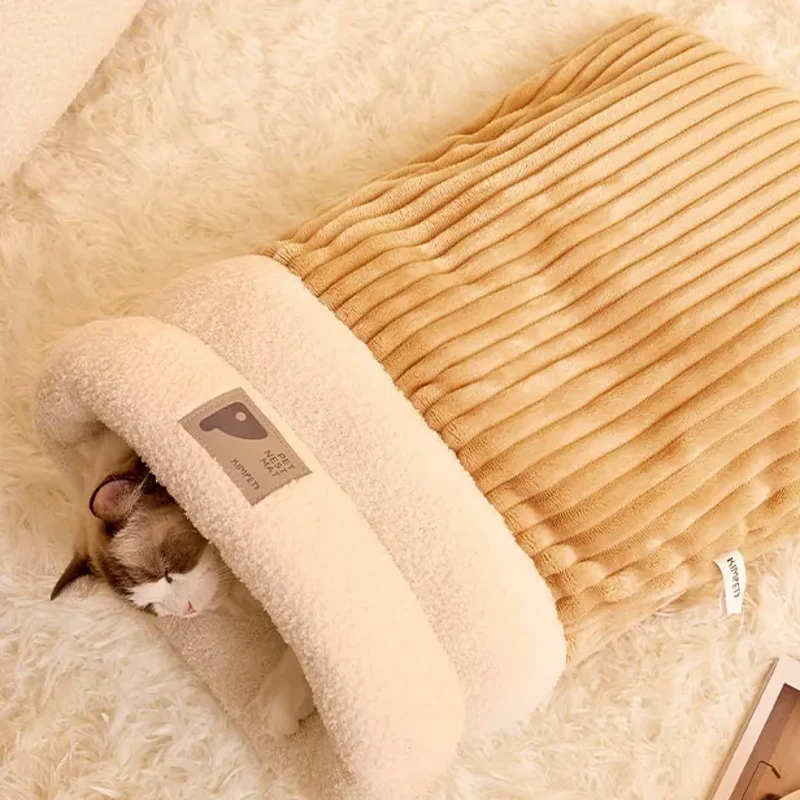
- Add a hideout. Many pets feel better in a space closed on three sides. A foldable cozy house or a velvet cave bed suits cats and small dogs. For a bigger dog, their usual crate, door open and draped with a blanket, plays the same role.
- Bring in familiar scents. Their bed, a soft blanket to burrow under, an old sweater of yours.
- Provide water and, for a cat, a litter box in the room.
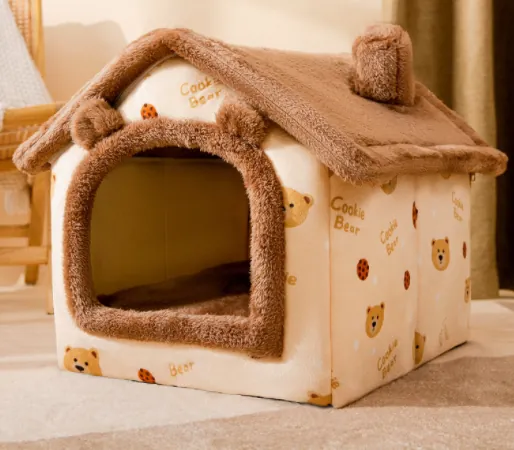 At CozzzypetsFoldable teddy bear houseFrom
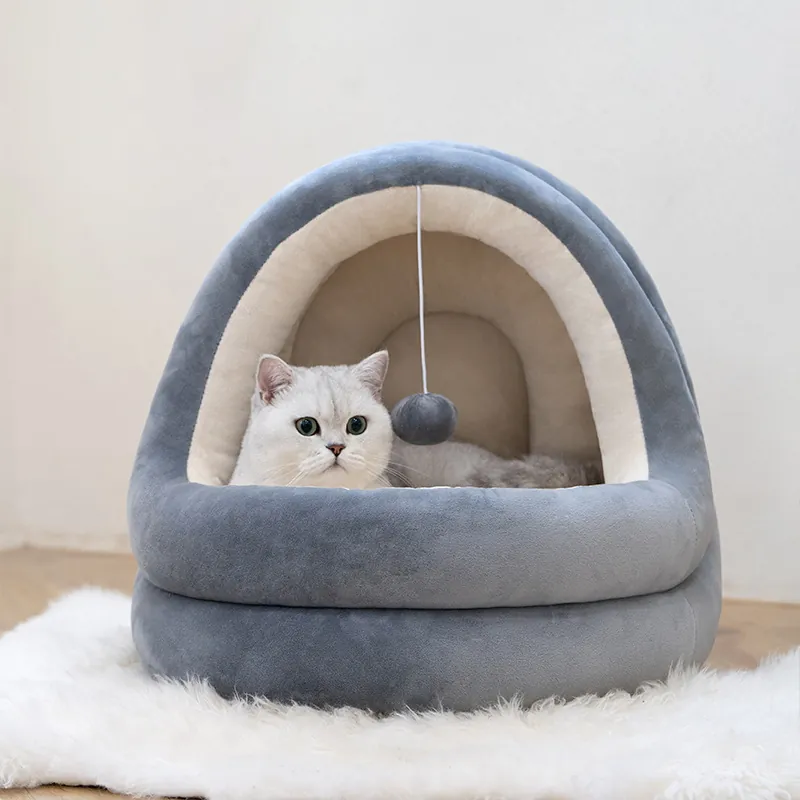 At CozzzypetsVelvet cave bed with pompomFrom
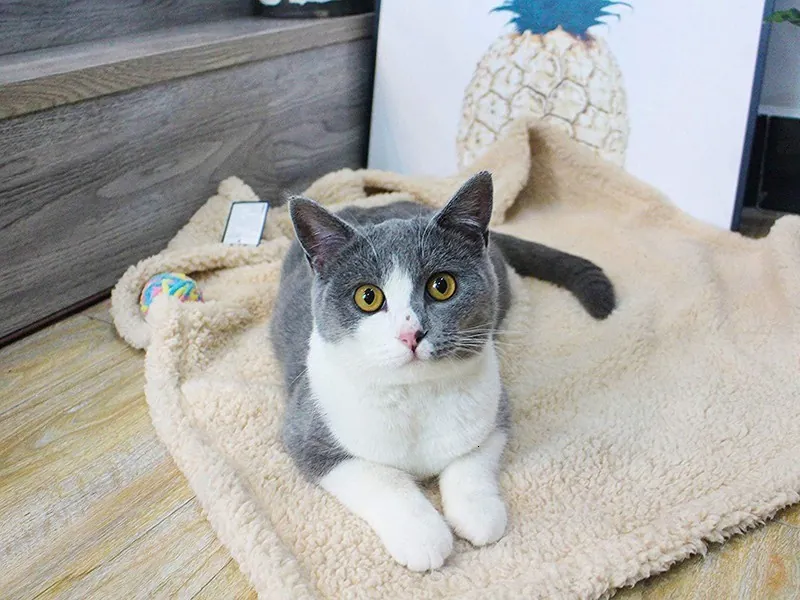
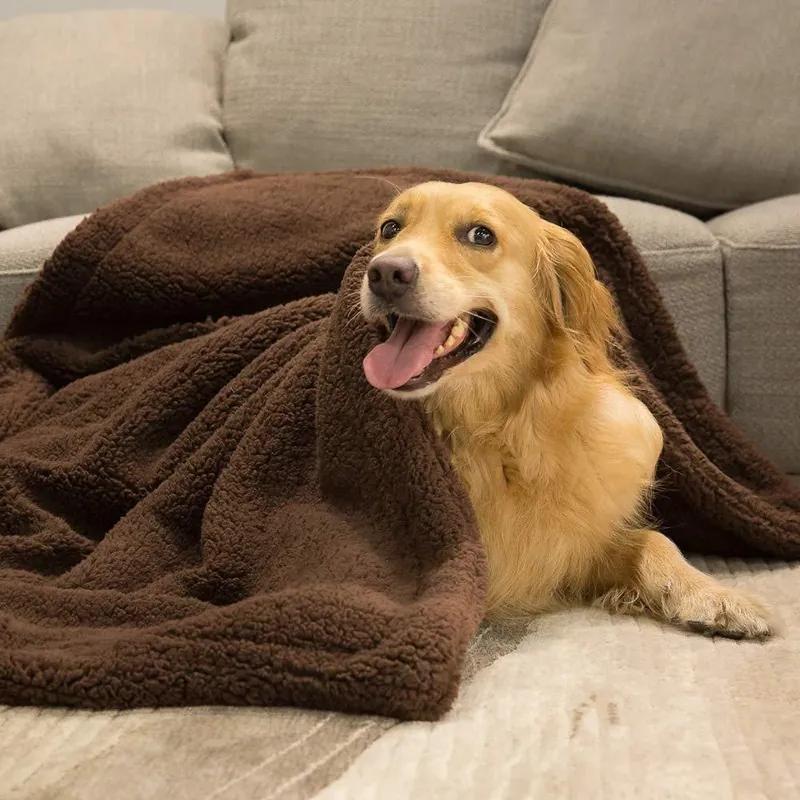 At CozzzypetsPlain sherpa blanketFrom
Let them come and go freely during the week, with a few treats. They should link the room with good moments.
Talk to your veterinarian if the fear is strong
If your pet panics every year, don’t wait until December 31. Your veterinarian can advise you, but you need to ask ahead of time.
On the day
- Take a long walk in the afternoon, while it is light and the neighbourhood is quiet. A dog who has moved and sniffed plenty rests more easily in the evening. In extreme cold, make up for it with indoor games: our ideas are in Indoor games for dogs in winter.
- Serve supper earlier. A worried pet doesn’t eat well. It is better if they have finished before the first firecrackers.
- Do the last outing before full dark, or at least well before midnight. Always on a leash, even in a fenced yard: one sudden bang is enough to send a dog over a fence.
- Keep cats indoors from late afternoon on.
During the evening
Close and cover
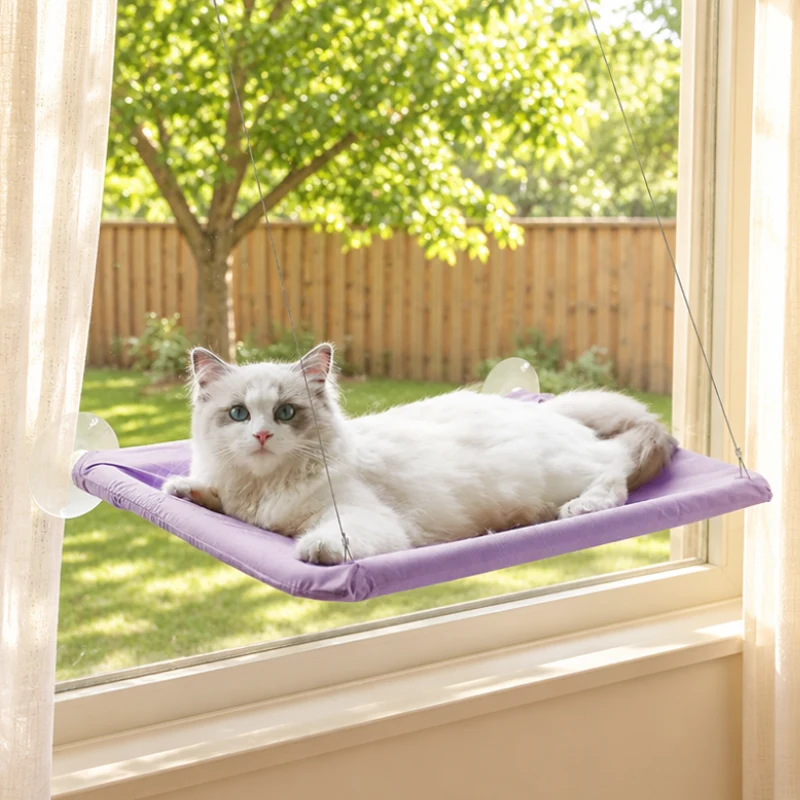
Close the windows and draw the curtains and blinds. This cuts down both the noise and the flashes of light.
Add background sound
The TV, the radio or a playlist of soft music, at normal volume, masks part of the outside noise. A fan or a kitchen range hood also makes a steady background hum.
Give them something to do
Offer a quiet activity they already enjoy:
- a lick mat spread with their usual wet food, prepared ahead in the freezer so it lasts longer;
- a treat puzzle game with part of their daily ration;
- a snuffle ball with a few pieces of kibble hidden inside.
Offer it before the noise starts. Once a pet is very worried, they stop eating. If they refuse, don’t insist.
Stay calm, stay close
Your attitude matters. Talk normally, move normally. If they come and lean on you, let them and pet them gently. If they prefer to hide, leave them in their hideout: don’t pull them out to comfort them, and don’t force them to “face” the noise.
Watch the door
If you are hosting, the front door opens often. Settle your pet in their room, door closed, before guests arrive, and put a small note on the door: “Do not open, pet inside.” Our article Hosting the holidays with a dog or cat has more tips for lively evenings.
Going out to celebrate?
Leave them at home, in their quiet room, with background sound and something to do. The AVMA advises against bringing pets to fireworks displays or gatherings. If they are usually very worried, ask someone they know to stay with them.
What about cats?
Cats often react silently: they vanish. Under the bed, at the back of a closet, on top of a shelf.
- Leave their usual hiding places accessible, and add one or two: a cardboard box open on one side, a cozy house.
- Don’t pull them out of their hiding place. They will come back on their own when things are calm.
- Check that no window is left ajar.
The next morning
- Inspect the yard before letting them out. The AVMA points out that fireworks debris may have landed in your yard, even if you didn’t set any off.
- Go back to the routine. Walk, meals and play at the usual times.
- Don’t worry if they are tired. A restless evening is made up for with a good nap.
Frequently asked questions
Should I comfort my dog?
Yes. Staying calmly beside them and petting them if they ask for it does not reinforce their fear. What matters is keeping a relaxed attitude, without overdoing it.
Can I bring my dog to watch the fireworks?
It is not a good idea: up close, the noise, the crowd and the smoke are far more intense, and the risk of your dog running off is real.
What time should the last walk be on December 31?
In the late afternoon or early evening, before the first firecrackers go off. If a later outing is needed, keep it short, on a leash and close to home.
My dog refuses to go out to pee after the fireworks. What should I do?
Don’t force them. Wait until the neighbourhood is quiet, then offer a short outing on a leash. It is normal for them to skip one.
How long does the fear last after the fireworks?
Many pets go back to their usual habits once the silence returns, sometimes only the next day. If yours stays subdued or refuses to eat the following day, call your veterinarian.
Sources: ASPCA, Holiday Safety Tips and AVMA, July 4 Safety