Dog boots for winter: protecting paws from salt and snow
Published October 23, 2026 · Updated November 17, 2026
In short : Boots keep salt and sand from lodging between the toes and prevent snowballs between the pads. Pick the size by tracing the paw, then get your dog used to them one boot at a time, with treats.
In winter, your dog’s paws walk on snow, ice, grit and a lot of de-icing salt. You can see it when you get home: a lifted paw, a stop to nibble between the toes, white marks on the floor. Boots are the most complete way to protect those paws, as long as you choose them well and take the time to get your dog used to them. Here is how, step by step.
Why boots?
According to the ASPCA, boots give the best coverage: they keep salt and sand from getting lodged between the toes, where they can cause irritation. The American Kennel Club (AKC) adds three reasons to care.
- Salt and de-icers. They build up between the toes, around the pads and under the nails. A dog that licks its paws afterwards swallows some of it.
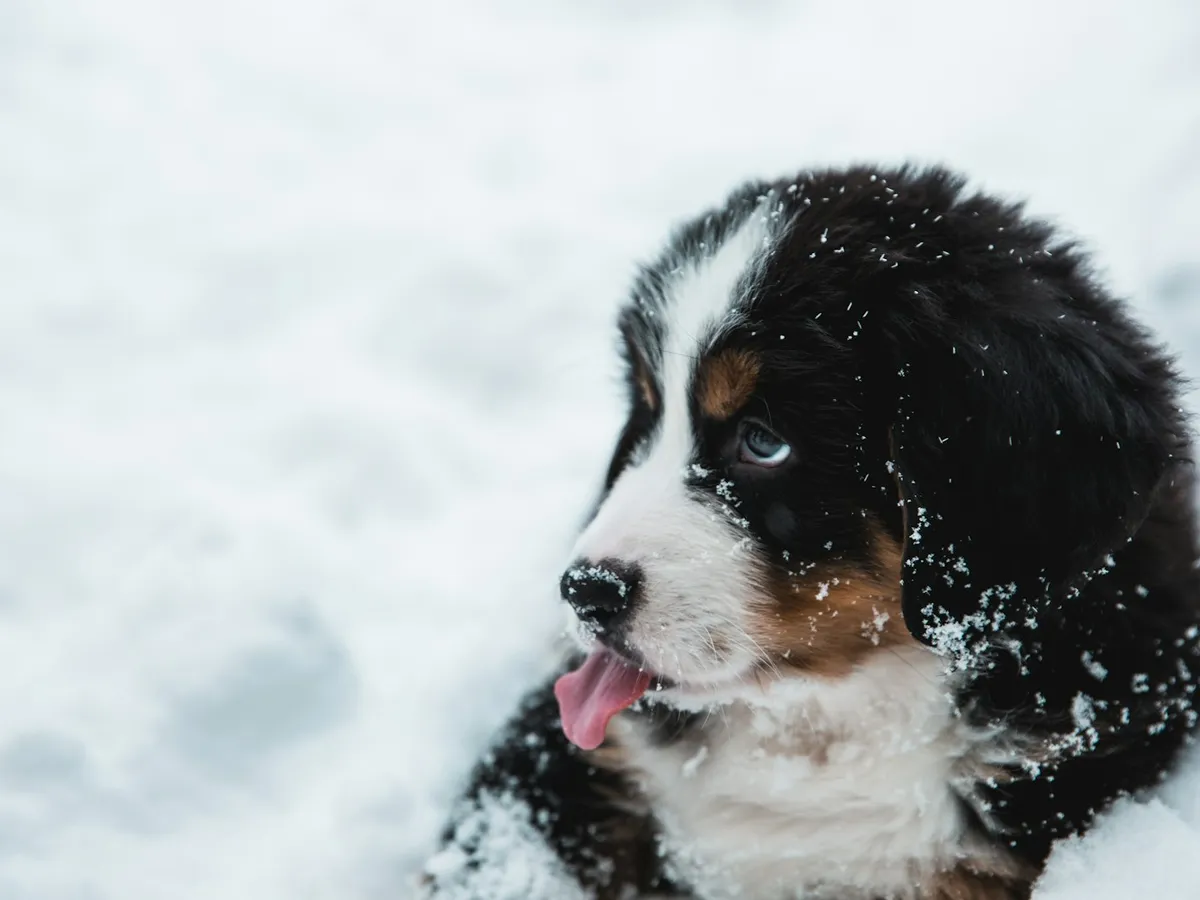
- Snowballs. On long-haired dogs, snow sticks to the hair between the pads and forms hard little balls that are uncomfortable to walk on. A dog that pulls them out can pull out hair too.
- Cold and ice. Dry indoor air, cold outdoor air and icy surfaces all contribute to dry, cracked pads.
Boots also give better grip on icy sidewalks, thanks to their non-slip sole. Not every dog needs them for a two-minute trip to the yard, but once your dog regularly walks on salted sidewalks, the difference shows.
What to look for before buying
The AKC suggests a few simple criteria for a good winter boot:
- A grooved, non-slip sole. That is what holds on ice.
- A water-resistant outer. Slush should not soak through. A boot that keeps moisture between the toes is not comfortable: always dry the paws and the inside of the boots after a walk.
- A warm lining. A soft interior insulates from the cold.
- An adjustable strap. It should be snug enough to keep the paw in place.
- The right size for your dog. A boot that is too big twists and falls off; too small, it squeezes the toes.
Our non-slip winter boots come as a set of 4, one for each paw. They are water-resistant, lined with cozy cotton and fitted with a non-slip sole. They are designed for small dogs (Yorkie, Chihuahua, Poodle, Bichon, Schnauzer), in sizes S to XL: measure the paw before choosing.
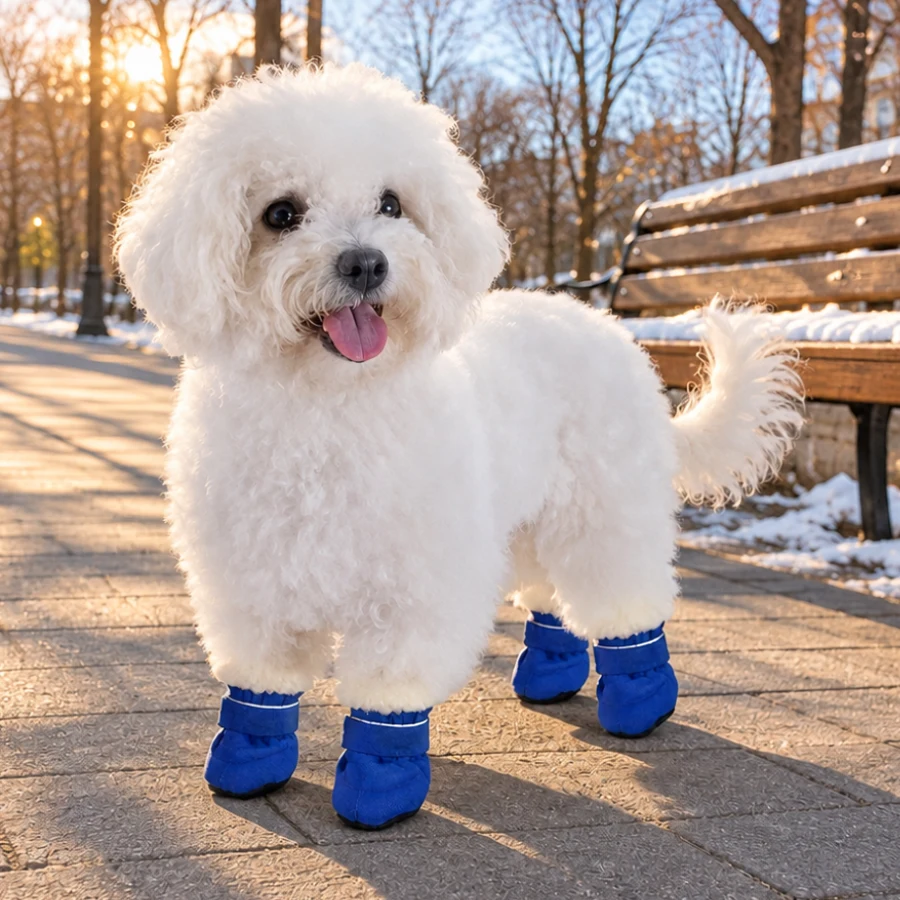 At CozzzypetsNon-slip winter boots (set of 4)
Getting the size right
- Have your dog stand on a sheet of paper with one front paw flat. Its weight needs to be on it: the paw spreads when it bears weight, just as it does when walking.
- Trace around the paw, nails included.
- Measure the width at the widest point, then the length of the tracing, and compare with the size chart on the product page or with our size guide.
Front paws are often a little wider than back paws: measure both. Between two sizes, take the larger one. At home, do a trial on a rug: the paw should stay firmly in place while your dog walks, without twisting or slipping out of the boot.
Getting your dog used to boots in 5 steps
Very few dogs accept boots on the first try. As the AKC puts it, patience and positive reinforcement make all the difference. Allow a few days, before the first real storm.
- Let your dog sniff. Put the boots on the floor, let your dog explore them and reward with favourite treats.
- One boot at a time. Put on a single boot for a few seconds, then take it off. Reward. Repeat with another paw.
- All four boots, indoors. A few minutes at first, playing so your dog thinks about something else, then a little longer each session.
- A short outing. Five minutes on the snow, in front of the house.
- Real walks. When you get back, check that nothing rubbed and that the straps left no mark.
If your dog freezes, shakes its paws or seems stressed, go back one step. Keep sessions short and cheerful.
No boots? The right habits
Some dogs never take to boots, and that is fine. Here is what the ASPCA and the AKC advise for bare-paw outings.
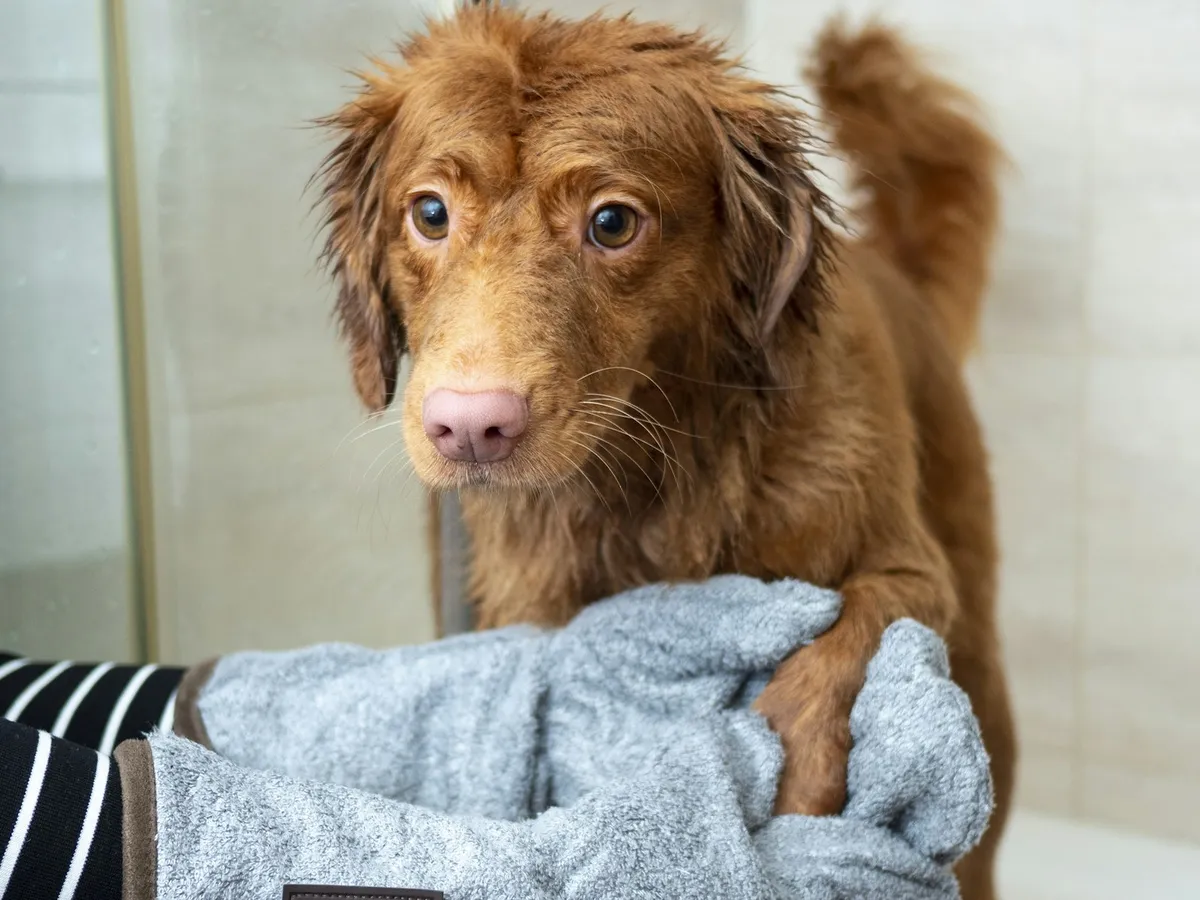
- When you get home, wash and dry the paws and belly to remove ice, salt and chemicals. A warm cloth is enough for small messes; gently part the toes and dry well. A microfibre towel by the door helps a lot. Our guide How to clean your dog’s paws after a winter walk walks through the routine.
- Don’t pull on ice balls. Soak a cloth in warm water and gently massage the pad to melt them.
- Have the hair between the pads trimmed by your groomer if your dog has long hair: snow sticks to it less.
- Check the pads: cracks, redness between the toes, debris under the nails.
- At home, choose an ice melt made for households with pets and keep all products out of reach. We compare the options in What ice melt is safe for dogs?
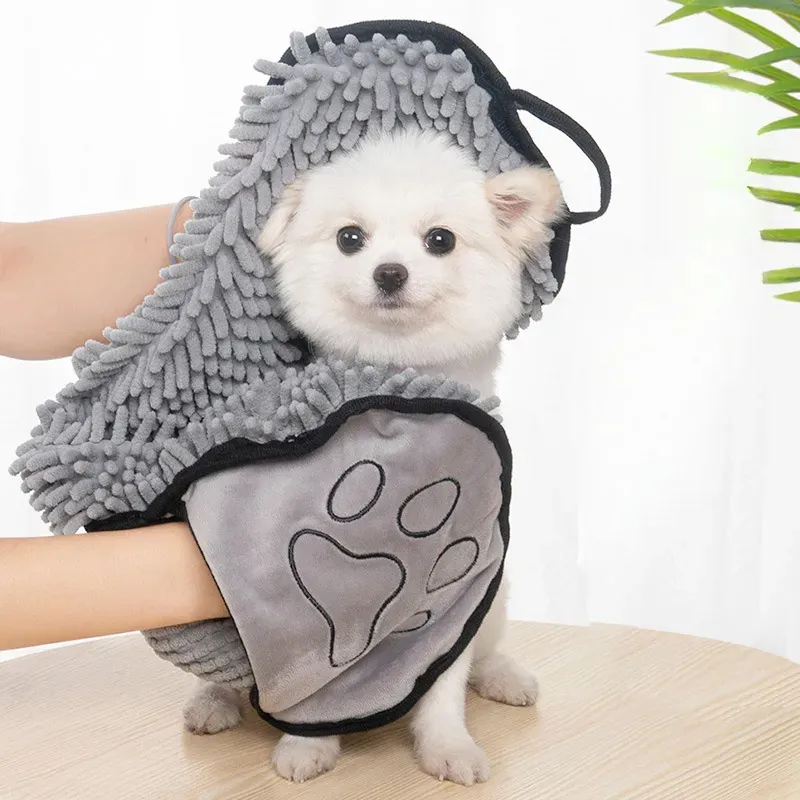 At CozzzypetsUltra-absorbent microfiber towel
If in any doubt (limping, sore, cut, constant paw licking), see your veterinarian.
Which to choose: boots or bare paws?
- Daily walks on salted sidewalks: boots are worth the training effort.
- A long-haired dog that collects snowballs: boots, or trimmed hair between the pads and a rinse when you get home.
- Short outings in a yard with no salt: bare paws, with a good dry afterwards.
- A dog that flatly refuses boots: bare paws, routes away from heavily salted sidewalks and a clean-up after every walk.
Our picks
- The non-slip winter boots, in a set of 4, for small dogs.
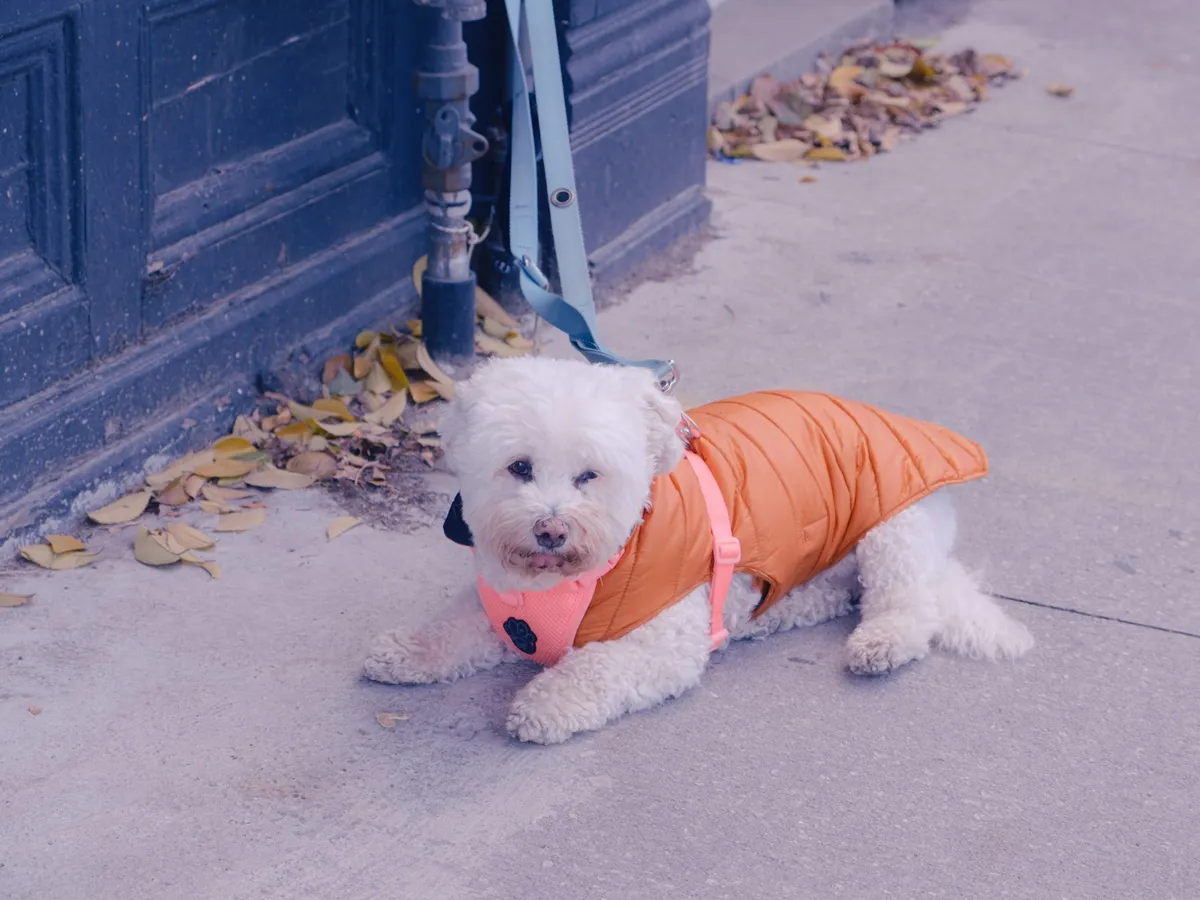
- The hooded winter coat, quilted, to complete your small dog’s outfit.
- Or a full outfit at a discount in the Bright Red Winter set: coat, boots and a hat-and-scarf set.
- More ideas for the cold months on our Canadian winter page.
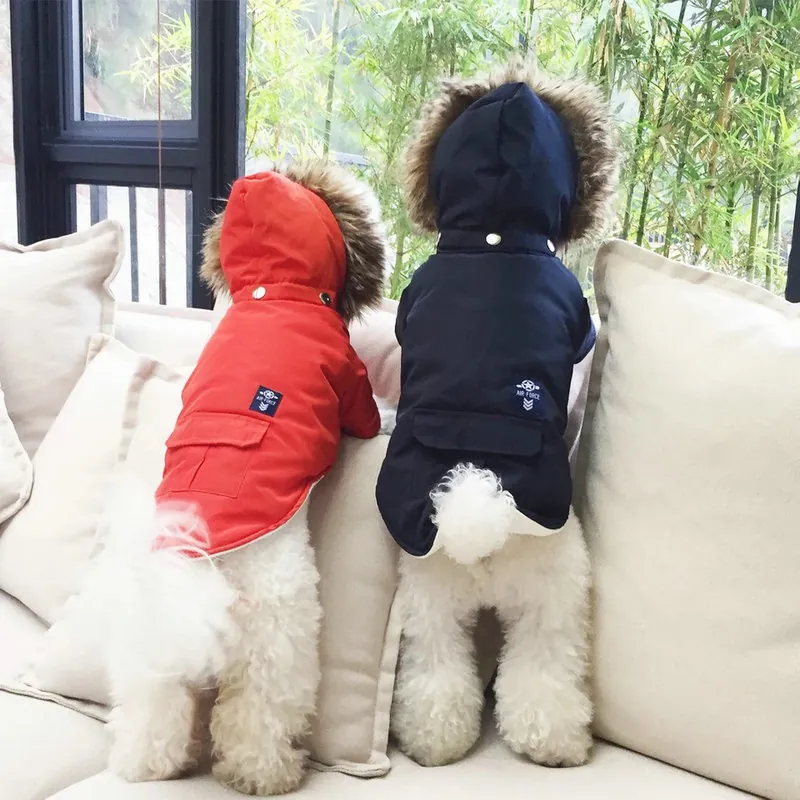 At CozzzypetsHooded winter coat
Frequently asked questions
My dog refuses to walk in boots. What should I do?
Go back to the previous step and move more slowly, always with treats. Try right before something your dog loves, like a walk or a meal. Some dogs need a week or two.
Can boots fall off in deep snow?
Yes, if the size is too big or the strap too loose. Tighten the strap above the paw without cutting off circulation: you should be able to slip a finger underneath. Glance at all four paws now and then during the walk.
How long can my dog wear them?
For the length of the walk. Take them off when you get in, dry the paws and let the boots dry before the next outing.
Does a large dog need boots?
Salt irritates the paws of all dogs, big or small. Our model is designed for small dogs; for a large dog, measure the paw the same way and look for a model in its size, or rely on cleaning the paws after every walk.
Do boots replace cleaning the paws?
Almost. A quick towel-off is still useful to dry the paws and the belly, where snow and salt stick too.