What ice melt is safe for dogs?
Published October 29, 2026 · Updated November 17, 2026

In short : No ice melt is risk-free, but salt-free and chloride-free products, or ones made with urea or magnesium chloride, are generally gentler than regular rock salt. Store them out of reach and wipe your dog's paws after every outing.
This article contains affiliate links: if you buy through them, Cozzzypets may earn a small commission at no cost to you. As an Amazon Associate, we earn from qualifying purchases.
No ice melt is completely risk-free for dogs, but salt-free and chloride-free products, or ones made with urea or magnesium chloride, are generally gentler on paws and stomachs than regular rock salt. The rest comes down to habits: what you put on your own walkway, what your dog licks off once home, and how you protect their pads.
Why winter salt is a problem
Most ice melts are salts. According to the ASPCA, the usual ingredients are sodium chloride (table salt), potassium chloride, calcium chloride or magnesium chloride.
The trouble comes two ways:
- Through the paws: crystals and salty slush irritate the pads, which can get dry, cracked or even bleed.
- Through the mouth: back home, your dog licks their paws. Some also eat snow or slush near treated sidewalks.
The ASPCA explains that the most common issue after swallowing ice melt is an upset stomach (vomiting, diarrhea). In larger amounts, sodium levels can rise and cause tremors or seizures, and calcium chloride products can irritate the mouth. The risk depends on the dog's size, how much they ate and the product.
The ingredients, one by one
The label on an ice melt tells you more than the words "pet-friendly" on the front of the bag. Here's what Pet Poison Helpline, a veterinary poison control centre, says about each one:
- Sodium chloride (rock salt, road salt): the most common. A small amount mostly causes vomiting and diarrhea; a large amount swallowed can be dangerous.
- Potassium chloride: a significant irritant to the stomach and intestines.
- Magnesium chloride: it irritates the digestive tract and can upset the stomach.
- Calcium salts (including calcium chloride): according to Pet Poison Helpline, these are the most severe irritants of all, for the digestive tract as well as the skin and paws.
- Urea: urea-based products are generally the ones labelled as safe around pets. If swallowed, it typically causes drooling and mild digestive irritation; large amounts can cause more serious problems.
The centre's conclusion is clear: all types of ice melt have the potential to be hazardous. Most exposures are limited to an upset stomach or skin irritation, but caution is still in order. That's why it's worth checking the ingredient list before you buy, then storing and using the product properly.
Which ice melt should you use at home?
You can't control what the city spreads on sidewalks, but you do choose what goes on your own steps.
Gentler options
Products labelled "pet-friendly" are often made with urea or magnesium chloride. The ASPCA notes they're generally gentler, but can still upset the stomach if swallowed. Other products are completely salt-free and chloride-free, and they're easy to find online.
How to use it
- Read the label and use the amount shown: more product doesn't melt ice faster.
- Store the container closed and out of reach, as the ASPCA recommends. A spilled bag in the garage gets licked quickly.
- Consider sand or fine grit on the steps: it won't melt ice, but it adds traction without irritating paws.
- Shovel often: less ice means less product.
Which one should you choose?
- You want to melt the ice: look for a salt-free and chloride-free product, or a urea-based one, and read the ingredient list. As much as possible, avoid products whose first ingredient is a calcium salt.
- You mostly want not to slip: sand or fine grit is often enough on steps and balconies, with nothing to lick off.
- Your dog spends a lot of time in the yard: keep their area product-free. Shovel, scrape the ice and save the ice melt for the driveway and sidewalk.
- You live in an apartment or condo building: you don't choose the product. Rely on booties and the paw routine back home instead.
Protecting paws on the walk
Boots
The ASPCA describes booties and paw wax as an excellent barrier for sensitive feet. Water-resistant non-slip winter boots, with a cozy cotton lining and a non-slip sole, keep pads away from salty slush. They're designed for small dogs; measure the paw and check the size guide before choosing.
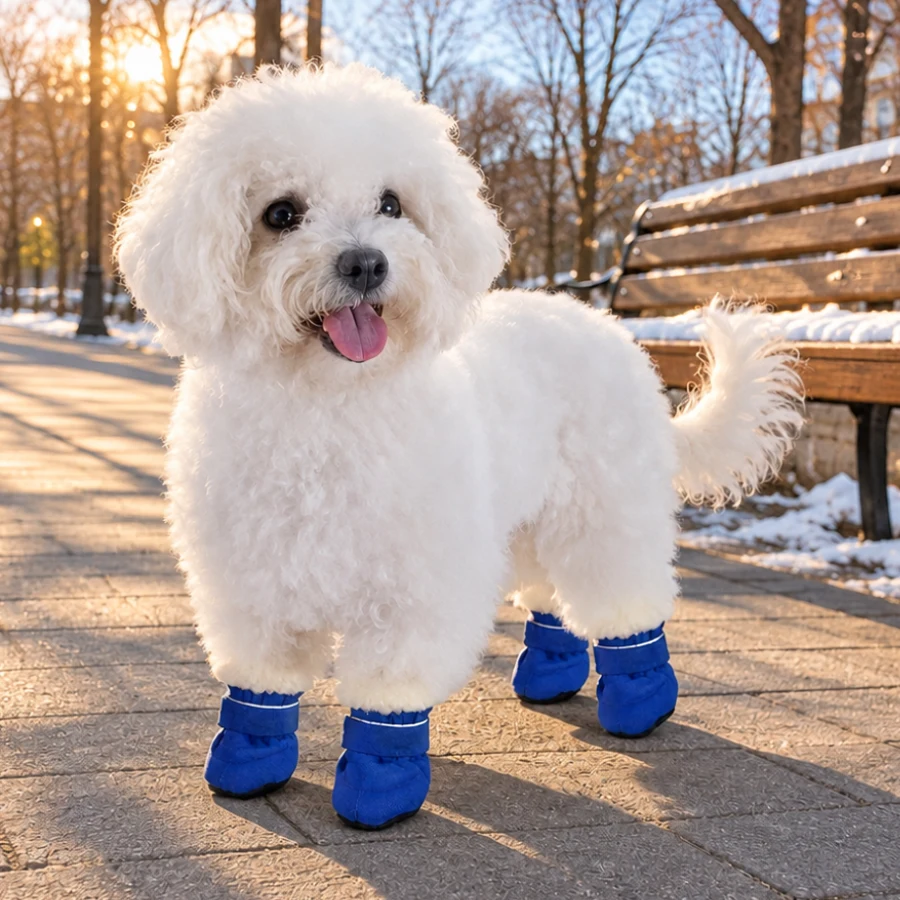 At CozzzypetsNon-slip winter boots (set of 4)
To get your dog used to them:
- Have them wear the boots for a few minutes indoors, with a treat.
- Gradually increase the time.
- Take a short first walk on a surface without ice.
The first steps are often comical. That's normal: after a few outings, most dogs walk just fine.
The route
- Avoid grey snowbanks near the road and slush puddles.
- Stop your dog from eating snow along treated sidewalks.
- Keep the fur between the pads trimmed short: snow and salt stick to it less.
The routine back home (2 minutes)
The ASPCA recommends wiping your pet's paws as soon as they come inside, with a damp cloth or baby wipes, and limiting licking until they're clean.
- Have your dog sit on a mat by the door.
- Remove ice balls between the pads.
- Wipe each paw with a damp cloth, then dry well between the toes.
- Wipe the belly and lower legs too.
- Take a quick look: redness, a small cut, a dry or cracked pad.
Our full guide on how to clean your dog's paws after a winter walk has all the details.
Frequently asked questions
Is table salt dangerous for dogs?
Table salt and road salt are both sodium chloride. A small amount licked off the paws often upsets the stomach; a large amount can be serious. Wipe paws after walks and call your veterinarian if you're unsure.
Is "pet-safe" ice melt risk-free?
No. It's generally gentler, but it can still upset the stomach if swallowed. Store it out of reach and wipe paws after every outing.
My dog licks their paws after walks. What should I do?
Wipe them right away with a damp cloth and dry them well. If your dog licks constantly, limps or has a red or cracked pad, see your veterinarian.
How do I know what's in my ice melt?
Look at the ingredient list, often on the back of the bag or container: that's what counts, not the picture of a dog on the front. If there's no list at all, choose a product that clearly shows what it's made of instead.
Are cats affected too?
Yes, a cat who goes outside walks through the same products and grooms their paws. The same precautions apply: a gentler product at home, stored out of reach, and paws wiped when they come in.