My dog eats too fast: why, and what to do?
Published October 26, 2026 · Updated November 16, 2026
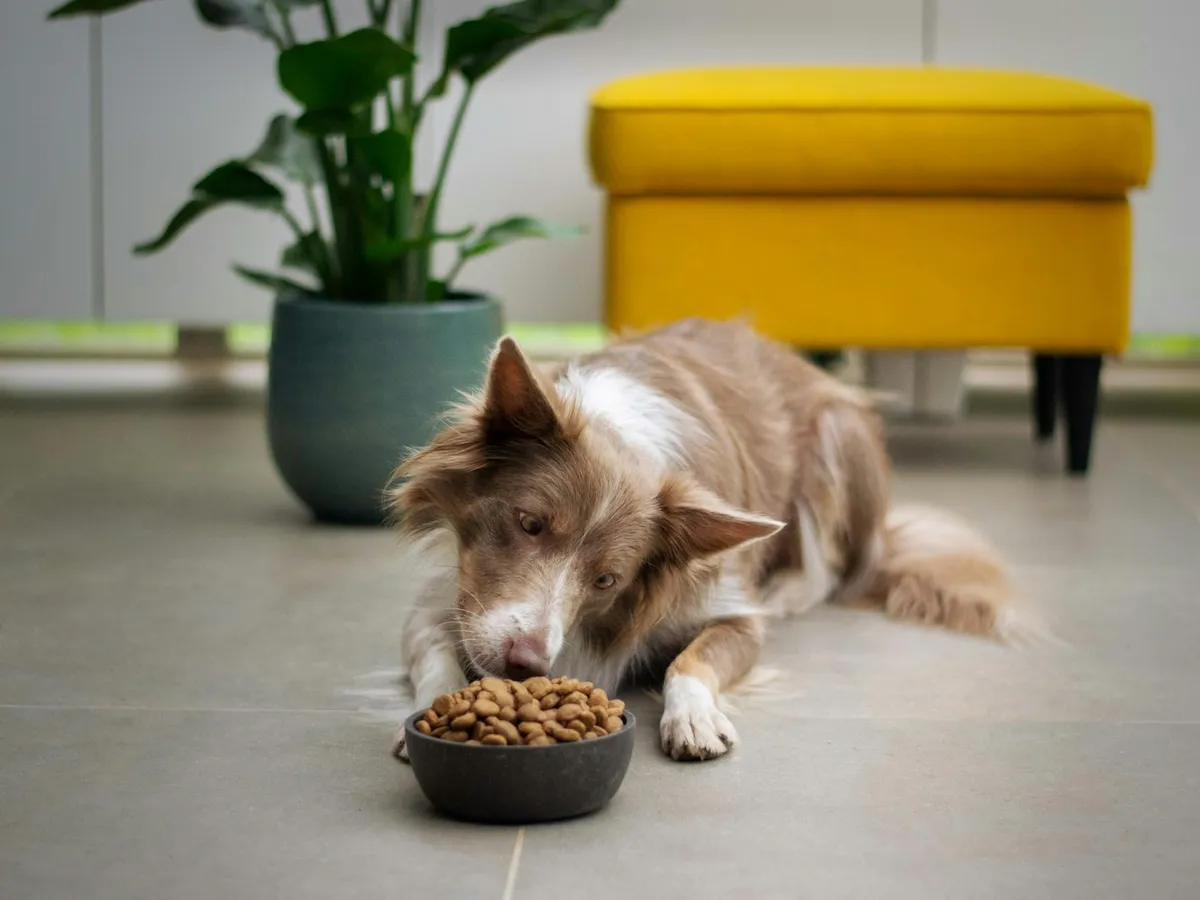
In short : A dog that eats very fast can swallow a lot of air and regurgitate. To slow meals down, use a slow-feeder bowl, a treat tumbler, a lick mat or a foraging toy, and feed your pets in separate rooms.
Some dogs eat every meal as if it were their last: the bowl touches the floor, and thirty seconds later it is empty, often without a single piece of kibble being chewed. It is not always greed, and it is not a character flaw. The good news is that you don’t need to change the dog. You only need to change the way the food is served.
Here is why some dogs eat so fast, why slowing down is worth it, and six simple solutions you can try tonight.
Why does my dog eat so fast?
There is rarely a single reason. The most common ones:
- Competition. A puppy raised in a big litter learned early that the fastest eater gets the most. The habit often sticks, even when they eat alone.
- Another pet nearby. A second dog, or even a curious cat circling the bowl, can be enough to rush them.
- Their history. An adopted dog who once went hungry may eat fast for a long time.
- Pure enthusiasm. Some breeds are famous food lovers. For them, mealtime is simply the best part of the day.
- Meals too far apart. One big meal a day leaves a lot of time to get very hungry.
If your dog suddenly starts eating much faster or seems much hungrier overnight, talk to your veterinarian: a sudden change in appetite is worth checking.
Why slow down?
A dog that gulps their food swallows a lot of air along with the kibble. They can choke, bring the meal back up a few minutes later or look uncomfortable. The American Kennel Club (AKC) also notes that eating very fast is one of the factors linked to bloat, a veterinary emergency seen mostly in large, deep-chested dogs.
There is a happier reason too. A meal swallowed in thirty seconds is thirty seconds of activity. The same meal served in a toy or a ridged bowl becomes ten minutes of sniffing, thinking and fun. For a dog who spends the day at home, that matters.
6 ways to slow meals down
1. A slow-feeder bowl
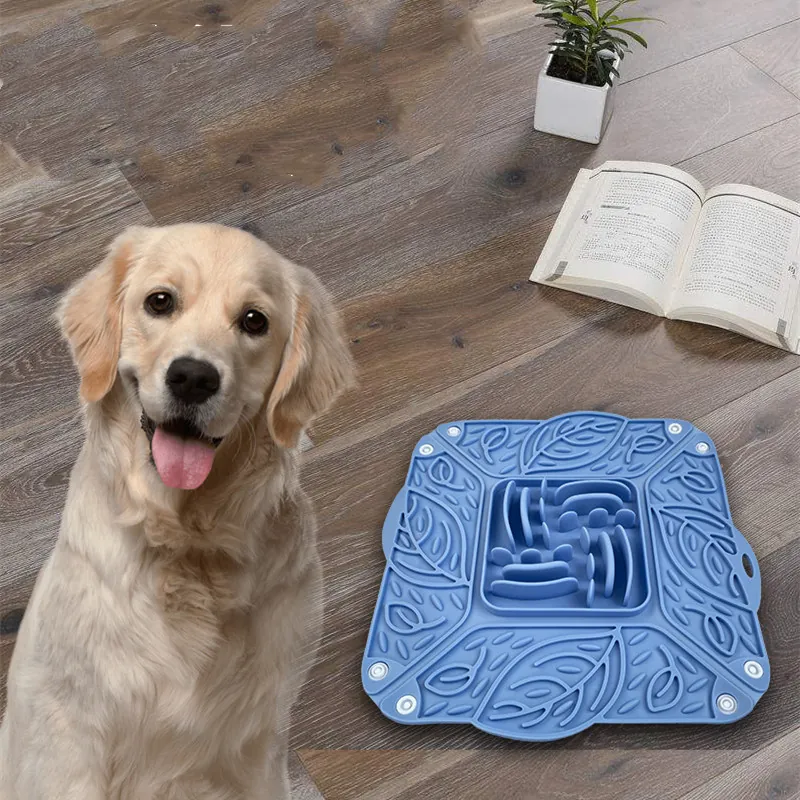
This is the simplest fix: you swap the bowl, and nothing else in the routine changes. The ridges force your dog to work around obstacles and take small bites with their tongue.
The maze slow-feeder bowl does the job all year, with a non-slip base that keeps it from sliding across the floor. For December, the Christmas tree slow feeder does the same thing in a festive shape.
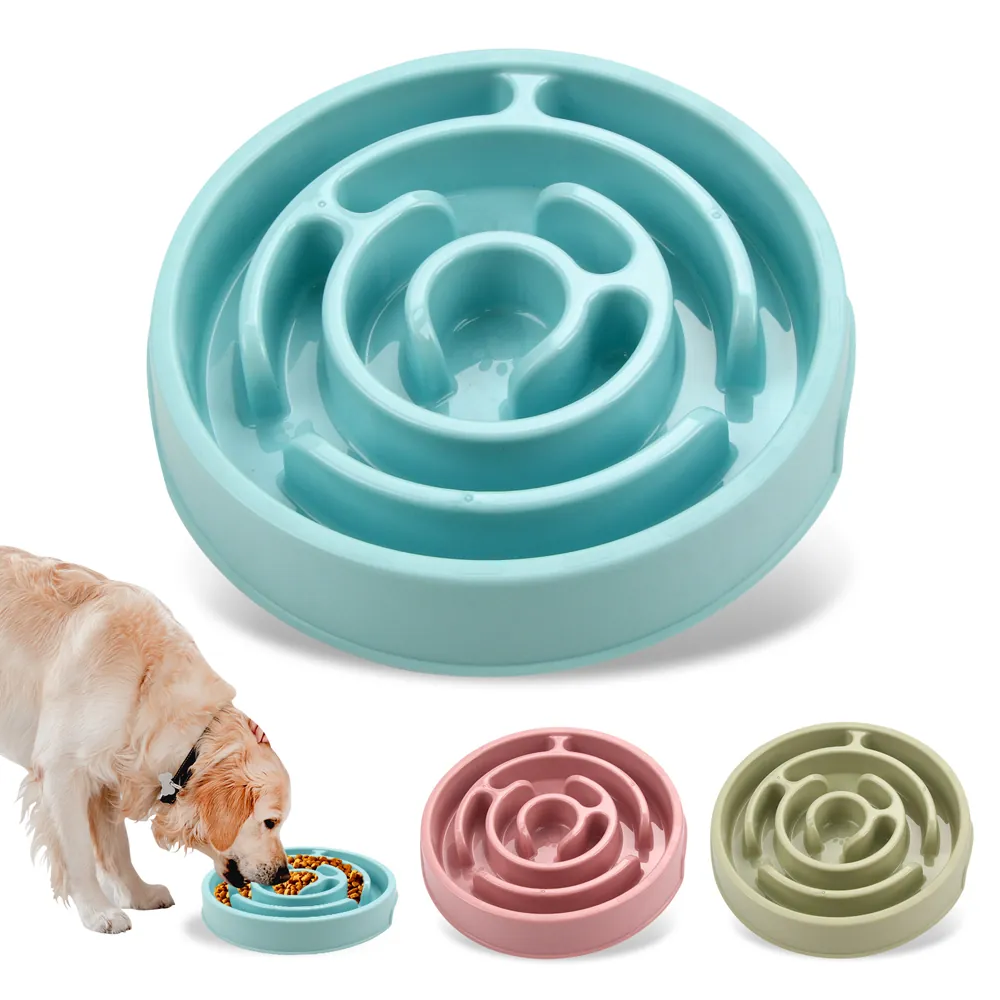 At CozzzypetsMaze slow-feeder bowl
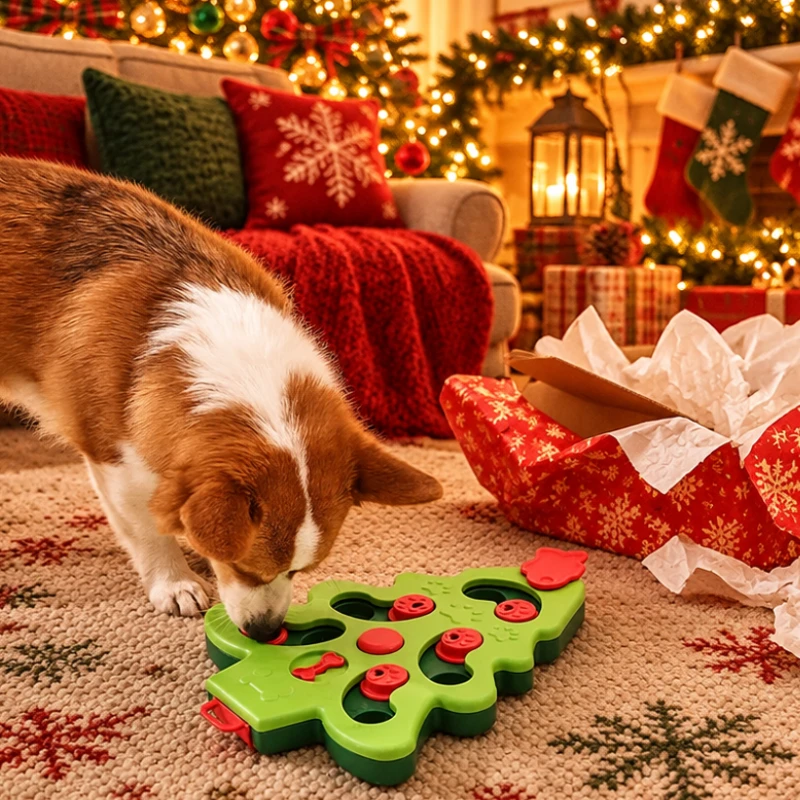 At CozzzypetsChristmas tree slow feeder
One tip: some dogs are puzzled the first few times. Start with a few easy-to-reach pieces, then fill it a little more at each meal.
2. A treat tumbler
The slow-feeder tumbler is filled with kibble. When your dog nudges it with their nose or paw, it rolls and drops the kibble one piece at a time. The meal becomes an active game: they have to move, push and follow the tumbler around the room.
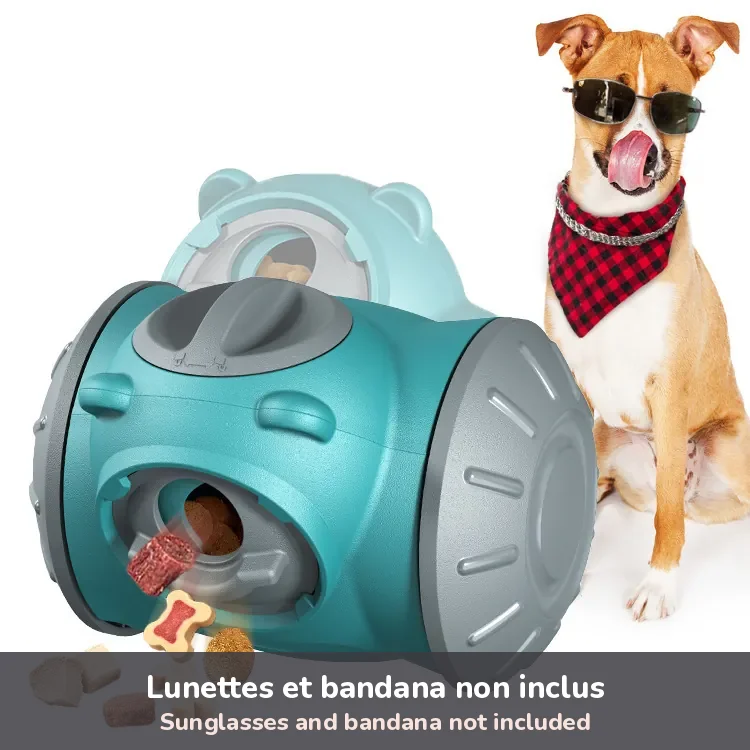 At CozzzypetsSlow-feeder tumbler
It is a good choice for energetic dogs and for dry kibble. Use it on a clear floor, away from furniture the tumbler could roll under.
3. A lick mat
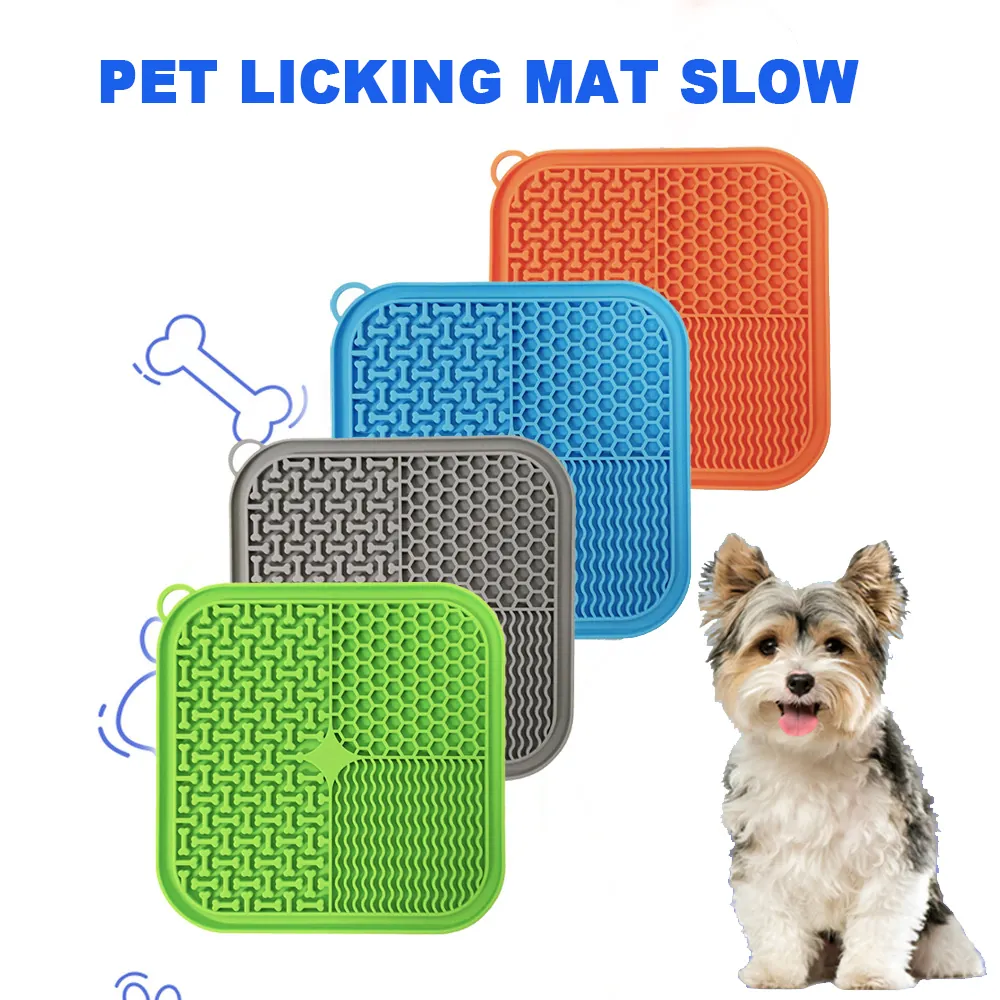
Ridged bowls work less well with wet food. That is where the lick mat comes in: you spread the food in a thin layer between the nubs, and your dog collects it one lick at a time. What used to vanish in ten seconds now keeps them busy for several minutes.
Our article Lick mat for dogs: what is it for and how to use it explains what to put on it and how to clean it.
4. Foraging
Left to their own devices, dogs would spend a good part of the day searching for food with their nose. Foraging toys give that pleasure back. Hide part of the meal in the folds of a snuffle ball: they have to find each piece of kibble one at a time.
You don’t need to put the whole meal in it. A handful of kibble in the ball and the rest in a ridged bowl is already much slower than before.
5. A puzzle game
A treat puzzle game asks your dog to slide or turn pieces to uncover the kibble. They can’t eat faster than they can think. It is the option that takes the most focus, which makes it perfect for a quiet evening meal.
Start easy, leaving a few compartments open, so they understand the idea and stay motivated.
6. Separate, better-spaced meals
Two changes that cost nothing:
- Separate your pets. If you have several animals, feed them in different rooms, or with a closed door between them. Without competition, many dogs slow down on their own.
- Split the ration. Two or three small meals a day instead of one big one: they arrive at the bowl less ravenous. The total amount for the day stays the same.
Homemade tricks, in the meantime
Want to try something right now, before buying anything? The AKC suggests two tricks made with things you already have in the kitchen:
- The cookie sheet. Spread the kibble in a single layer on a large baking sheet. Your dog has to pick up the pieces one by one.
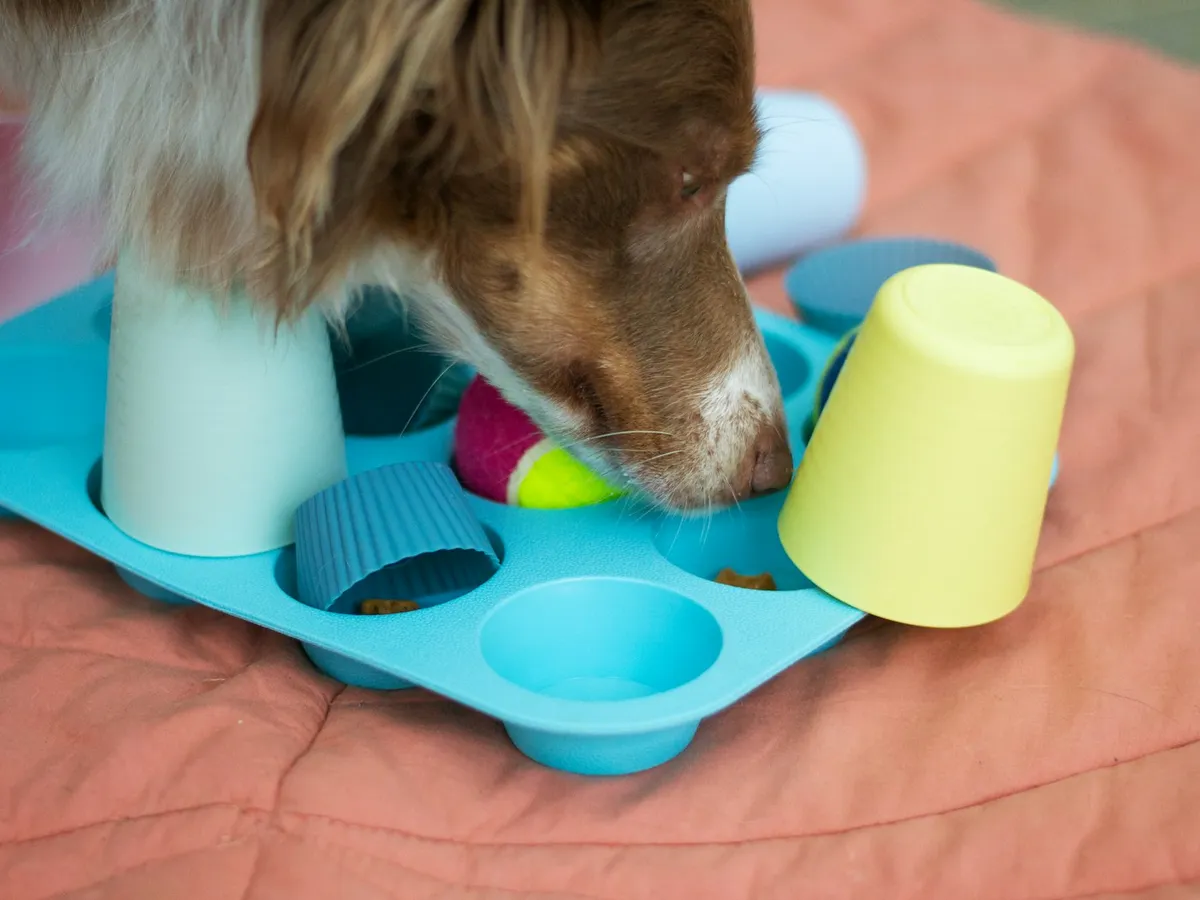
- The muffin pan. Divide the meal among all the cups. They have to move from one cup to the next.
These tricks work in a pinch, but a metal sheet slides around and is noisy on the floor. A bowl designed for the job, with a non-slip base, is more practical day to day.
Which one should you choose?
It depends on what your dog eats and on their personality.
- They eat kibble and you want the simplest fix: a ridged bowl. It replaces the usual bowl, meal after meal.
- They eat wet food: a lick mat.
- They have energy to burn: a treat tumbler, which gets them moving.
- They get bored during the day: the snuffle ball or the puzzle game, which work their nose and their brain.
- They eat a bit of everything: the 3-in-1 silicone slow-feeder tray combines two bowls, a slow-feeder zone and two licking surfaces.
Nothing stops you from alternating: the ridged bowl in the morning when you are in a hurry, a foraging game in the evening when you have time. Variety keeps things interesting. Our Dog who eats too fast page gathers all these options in one place, and the Calm Mealtime Set brings several of them together.
Whatever you choose, stay close the first few times. A feeding accessory is not a chew toy: if your dog starts gnawing on it once the kibble is gone, take it away and store it until the next meal.
Frequently asked questions
Can I put a ball in the bowl?
It is a well-known trick: the ball forces your dog to eat around it. It must be big enough that they cannot possibly swallow it, and clean. A bowl designed to slow meals down is safer and easier to wash.
Do slow-feeder bowls really work?
For most dogs, yes: a thirty-second meal easily stretches to several minutes. Some very determined dogs do figure them out over time. If that happens, switch models or alternate with a foraging game.
My dog gives up on the ridged bowl. What should I do?
Make it easier at first: less kibble, placed on top of the ridges. Stay close and encourage them. Most dogs get the idea within two or three meals.
Do cats eat too fast too?
Some do, and they may also bring food back up right after eating. A lick mat, a maze bowl or a small snuffle ball works for them as well, with small portions.
Should I add water to the kibble to slow my dog down?
Adding water does not really slow a dog in a hurry. Softened kibble spread on a lick mat does. Before changing your dog’s diet, ask your veterinarian.
Source: American Kennel Club, 4 Ways to Slow Your Dog’s Eating