My cat scratches the couch: why, and what to do (without punishment)
Published October 26, 2026 · Updated November 16, 2026
In short : Scratching is a natural need: don’t punish it. Put a sturdy scratcher right next to the couch, make the fabric less appealing while the new habit forms, reward the right choice and keep their claws trimmed.
This article contains affiliate links: if you buy through them, Cozzzypets may earn a small commission at no cost to you. As an Amazon Associate, we earn from qualifying purchases.
A frayed couch corner, an armchair in shreds: before you get angry, know that your cat isn’t doing it to annoy you. The Cornell Feline Health Center is clear on this: cats scratch to meet their needs, not to get revenge. And because the behaviour is innate, you can’t really stop it. You can, however, redirect it.
So the goal isn’t to keep your cat from scratching, but to offer a better place to do it, and to make the couch less tempting while the new habit takes hold. Here’s how, in five steps.
Why do cats scratch?
According to the ASPCA and the Cornell Feline Health Center, scratching serves several purposes:
- Marking territory. The paws have glands that leave a scent, and the visible marks act as a signal to other cats.
- Maintaining claws. Scratching removes the worn outer sheath and exposes the sharper claw underneath.
- Stretching. A good scratch stretches the whole body, from the front legs through the back.
- Playing and letting off steam. Many cats scratch when they’re excited.
Why the couch, of all things?
- It’s sturdy: it doesn’t move when your cat pulls on it with their full weight.
- It’s tall enough for a full stretch.
- It’s in the middle of the home, where you spend your time. For marking territory, it’s prime real estate.
- The fabric grips the claws nicely.
A good scratcher therefore has to offer the same things: stability, height or length, a pleasant texture and a prime location.
Step 1: Watch how your cat scratches
Before you buy, watch your cat at work. The Cornell Feline Health Center advises noting two things:
- Orientation. Do they scratch standing up, stretched against the arm of the couch (vertical), or flat on the rug (horizontal)?
- Texture. Do they prefer a rough fabric, carpet, cardboard?
The ASPCA suggests offering several materials and positions, then adding more of the type your cat likes best.
Step 2: Offer the right scratcher, in the right spot
What makes a good scratcher
- Stable. Both organizations stress this: a scratcher that tips or slides frightens the cat, who goes right back to the couch.
- Big enough. For a vertical scratcher, Cornell recommends a height at least equal to your cat standing on their hind legs with front legs stretched out.
- The right material. For a cat that goes after the couch, Cornell suggests sisal or a rope-like material.
Based on how they scratch
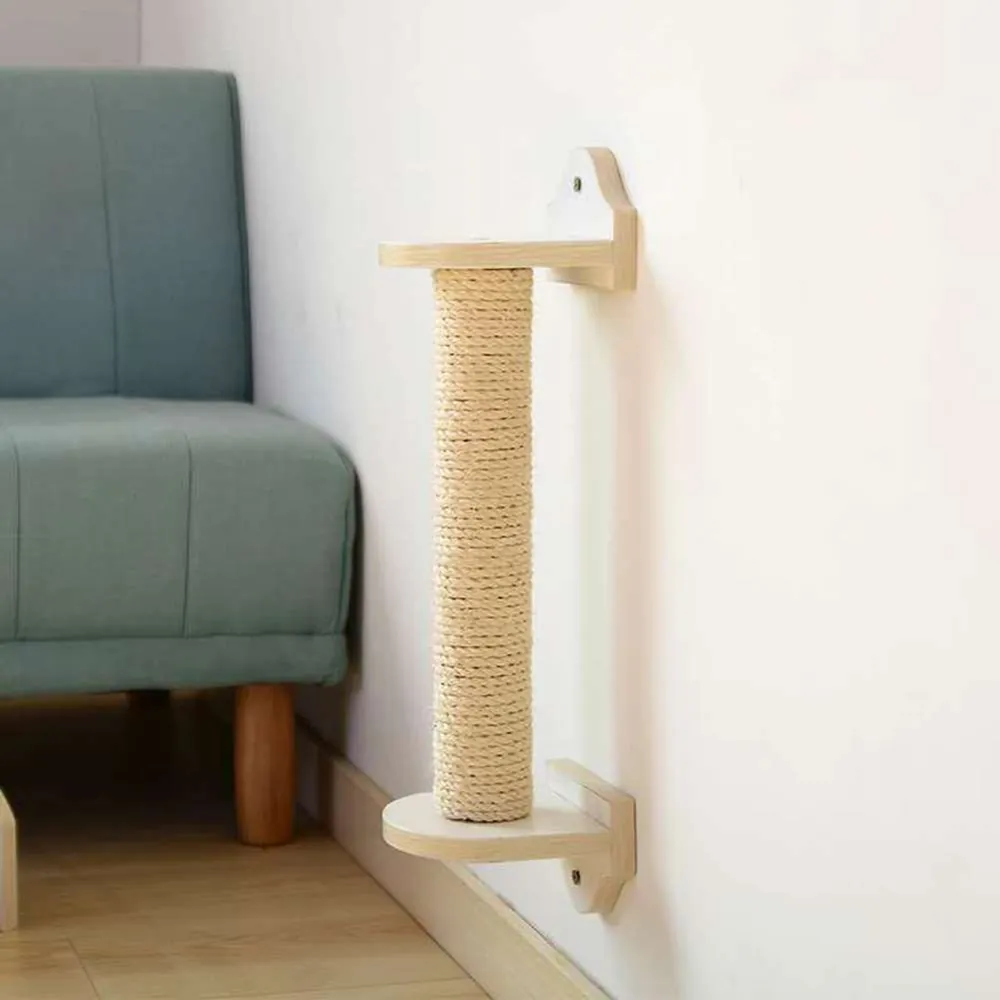
- They scratch the couch corner, vertically: the sisal wall-corner scratcher folds around the corner of a wall or sofa. It protects the exact spot while offering an approved surface.
- They scratch flat, on the rug: the sisal scratching mat lies on the floor or against a piece of furniture.
- They love cardboard and naps: the accordion scratcher lounge handles both.
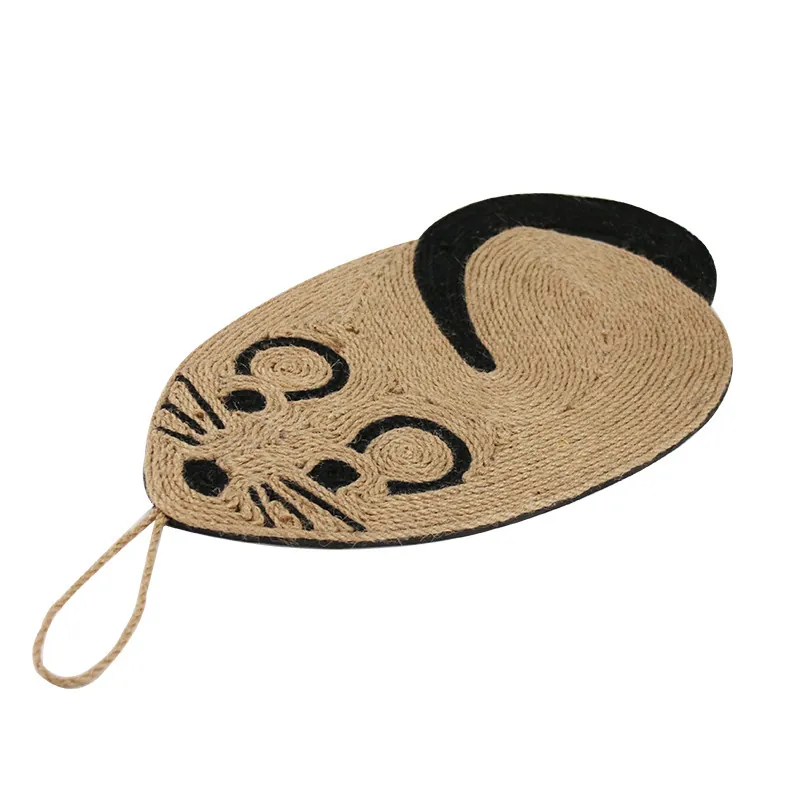
- They need a small extra scratcher: the mouse-shaped sisal scratch pad is easy to place near their bed or in another room.
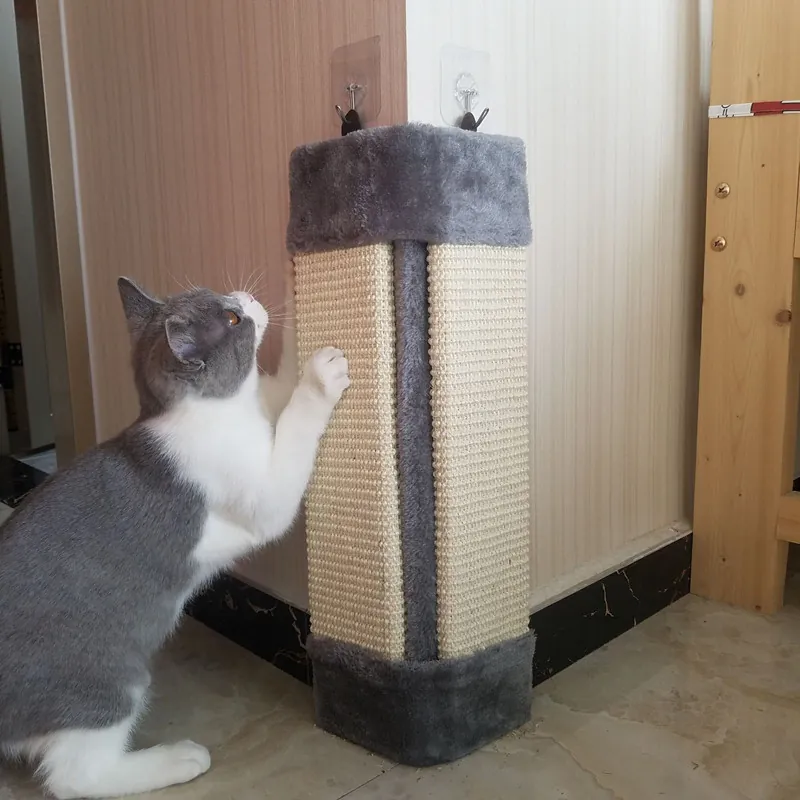 At CozzzypetsSisal wall-corner scratcher
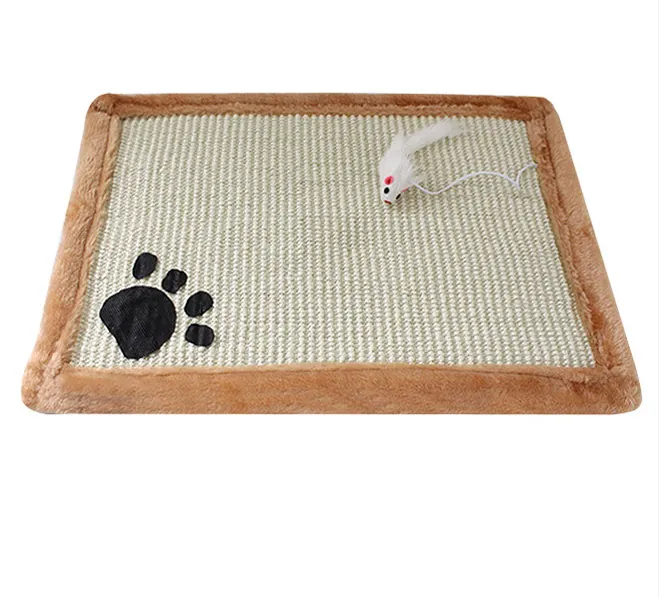 At CozzzypetsSisal scratching mat
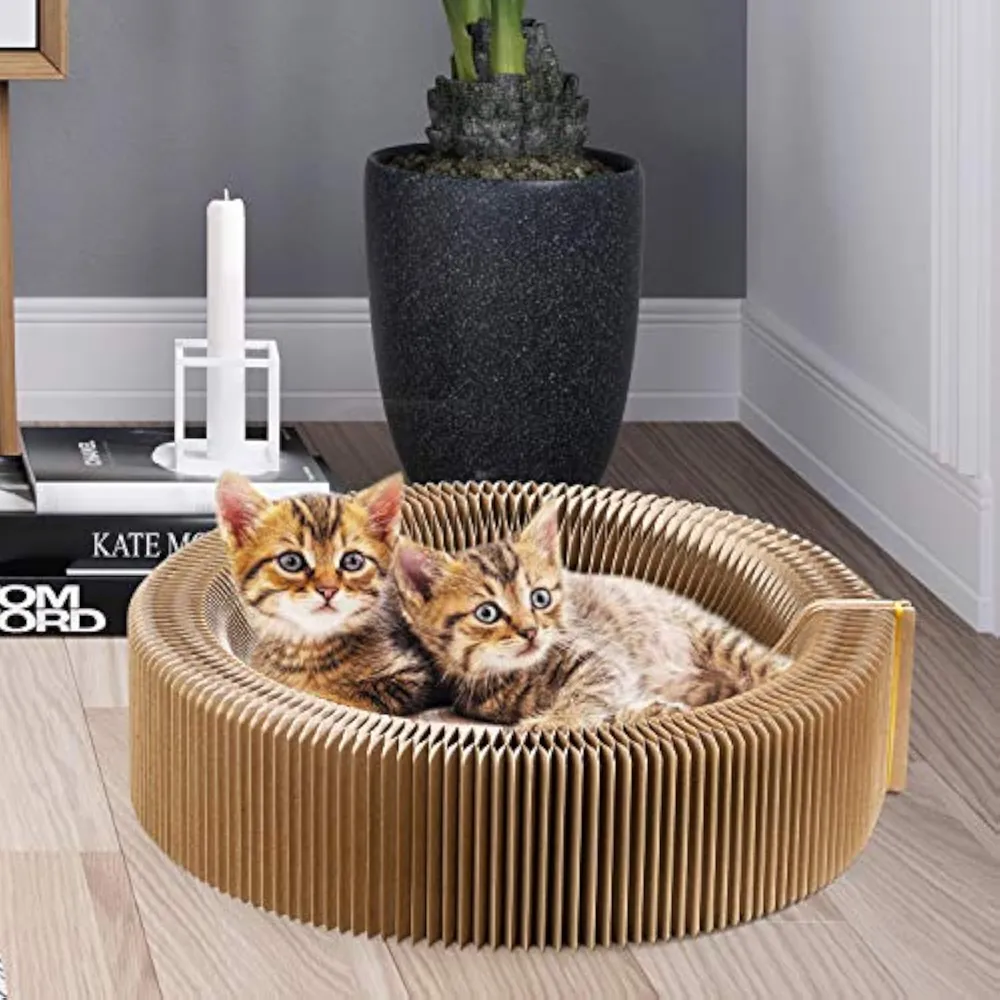 At CozzzypetsAccordion scratcher lounge
Location makes all the difference
Put the scratcher right next to the spot they already scratch. A scratcher hidden in the basement won’t get used. Cornell recommends starting there, then gradually moving it to where you’d prefer once the habit is formed. If your cat scratches in several places, you need a scratcher near each one.
Step 3: Make the couch less interesting
While your cat is learning, protect the targeted areas:
- Protective sheets. Clear anti-scratch furniture sheets stick to the corners and sides of the couch and are nearly invisible.
- A blanket or throw pulled tight over the couch arms. The ASPCA also mentions plastic and double-sided sticky tape: cats dislike the feeling under their paws.
- Clean the scratched areas. Cornell notes that cats go back to scratch where they smell their own scent; an odour neutralizer helps.
And always, an approved scratcher right beside it: block one option, offer a better one.
Step 4: Encourage the right choice
- Draw them in. Rub a little catnip on the scratcher or hang a toy on it, as the ASPCA suggests. The cactus scratcher tumbler, a sisal ball filled with catnip, adds play to scratching.
- Reward in the moment. As soon as they use the scratcher: a treat, a pet, a kind word.
- Play near the scratcher. Run a feather wand across it: their claws will catch on it all by themselves.
- Interrupt calmly. If they start on the couch, lure them to the scratcher with a toy, then praise them.
- Keep the old scratcher. A shredded scratcher is a scratcher that works, according to the ASPCA and Cornell: cats prefer them that way, with their scent on them.
What not to do
- Don’t scold. Cornell advises against yelling, water and loud noises: your cat may learn to fear you… and to scratch only when you’re not around.
- Don’t rub their paws on the scratcher. The ASPCA warns that forcing a cat can frighten them and put them off the scratcher.
Step 5: Keep their claws trimmed
Regularly trimmed claws do far less damage to fabric. With a nail clipper, remove only the hooked tip, avoiding the pink part at the base of the claw, as Cornell explains. If you’re not comfortable, ask your veterinarian or a groomer for a demonstration.
For care sessions like nail trims or baths, anti-scratch cat booties protect your skin; they’re worn briefly, under supervision.
All our tips and scratchers are gathered on the Cat who scratches page.
How long before you see a change?
Every cat goes at their own pace. Some take to a new scratcher within days; others need a few weeks of consistency. Leave the protection in place until the habit is well established, then remove it one piece at a time.
Frequently asked questions
How many scratchers do I need?
At least one near each spot your cat likes to scratch. Another near their sleeping spot is a good idea: many cats stretch and scratch when they wake up. In a multi-cat home, plan for more.
My cat ignores the scratcher. Why?
Check three things: is it stable, big enough for a full stretch, and placed where your cat already scratches? Also try a different texture or orientation, and add a little catnip.
Is declawing a solution?
No. Cornell points out that it isn’t a simple nail removal but the amputation of bone at the tip of each toe, and that the cat keeps the urge to scratch. The ASPCA strongly opposes it, and many veterinary associations in Canada consider the surgery unacceptable without a medical reason. The solutions above are far gentler.
Do nail caps work?
They’re small plastic caps glued over the claws, which Cornell and the ASPCA mention as a temporary option for cats that tolerate having their paws handled. They need to be replaced regularly. Talk to your veterinarian.
My cat scratches the rug too. What should I do?
That’s a cat who prefers to scratch horizontally. Offer a scratching mat or a flat cardboard scratcher, placed right where they scratch.