How long should you play with your cat every day?
Published October 26, 2026 · Updated November 12, 2026
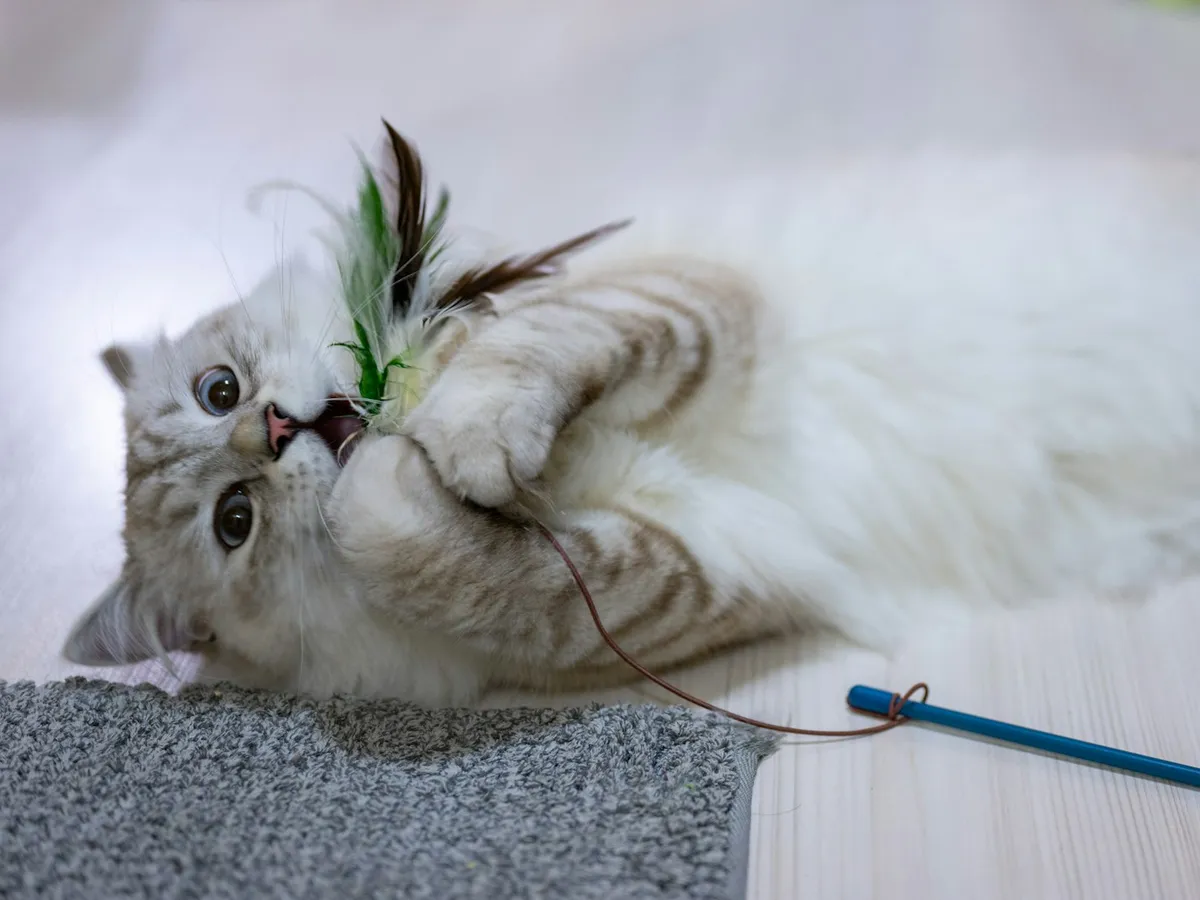
In short : For most cats, two or three 5 to 15-minute sessions a day make a real difference. Kittens want more and seniors gentler sessions, ideally in the morning and evening, acting like prey.
For most cats, two or three play sessions of 5 to 15 minutes a day are enough, especially in the morning and evening, when they're naturally more active. What matters isn't the length but the quality: play that mimics a real hunt, with a satisfying ending.
An indoor cat has no mice to hunt… except the ones we give them. Play replaces hunting: it gets them moving, keeps their mind busy and strengthens your bond. In winter, when days are short and everyone stays inside, those few minutes matter even more.
The right amount by age
Every cat is different, but here are simple guidelines:
- Kittens (up to about 1 year): lots of energy. Several short sessions a day, broken up by naps, suit them well. They often play in bursts of a few minutes.
- Adult cats: two or three 5 to 15-minute sessions a day make a real difference, especially for a cat living alone indoors.
- Senior cats: they still play, just more gently. Shorter sessions, with slow movements along the floor and no jumping.
- Very active cats or energetic breeds: they often want more. Add toys they can use on their own between your sessions.
The best indicator is your cat. After a good session, they pant a little or flop down, satisfied. If they run off looking for something else to catch, they wanted more.
If your cat stops playing entirely after enjoying it before, or seems tired, out of breath or limping, see your veterinarian.
The method that works: act like prey
Cats are hunters. The play they love most follows the same pattern as a real hunt:
- Stalk: move the toy away from them, hide it behind furniture, let a bit peek out. Your cat crouches, eyes locked on.
- Chase: alternate quick moves and pauses, like a small critter darting off then freezing. Move the toy across their path, never straight at them: prey runs away, it doesn't attack.
- Catch: let them win several times during the session, and especially at the end. A cat that never catches anything gets discouraged.
- Eat: finish with a small meal or a treat. It's the natural end of the hunt.
- Sleep: they'll take a good, satisfied nap.
Slow the game down in the last minutes, like tired prey, instead of stopping suddenly. Your cat winds down gently.
The best time to play
- Morning: a short session before you leave helps them have a calmer day.
- Evening, before bed: often the most important session. Followed by a small meal, it helps many cats sleep better at night… and let you sleep too.
- When they ask for it: a cat who follows you, meows or attacks your ankles is often telling you they need to move.
Avoid playing right after a big meal: they'd rather digest in peace.
Playing when you're short on time
Even with a busy schedule, a few tricks help:
- Five minutes beats nothing: a quick wand session while the coffee brews really counts.
- Self-serve toys: leave out a few toys they can use alone, like a ball tower or a spring pompom.
- Kibble hunt: hide a few pieces of their daily food around the house for them to find.
- Rotation: leave only 3 or 4 toys out at a time and swap them every two or three days. A toy that "comes back" feels brand new.
For more ideas during the cold season, read our article on indoor games for cats in winter.
Our best toys for playing with your cat
Here are the toys in our shop that fit each stage of the "hunt" best.
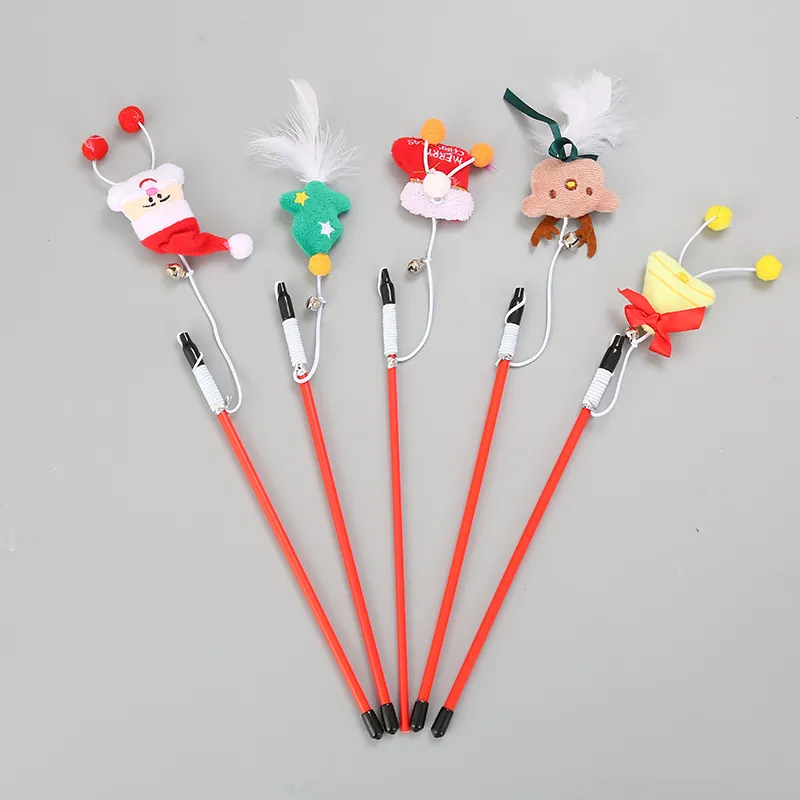
The Christmas cat wand
The Christmas cat wand has a plush decoration with a small bell on the end of an elastic cord. It's the ideal toy for playing together: you control the "prey," your cat hunts it.
 At CozzzypetsChristmas cat wand
- Best for: every cat, from kitten to adult, for your daily sessions.
- Styles: reindeer, tree, bell, Christmas boot or Santa.
- Good to know: put it away after play, out of your cat's reach.
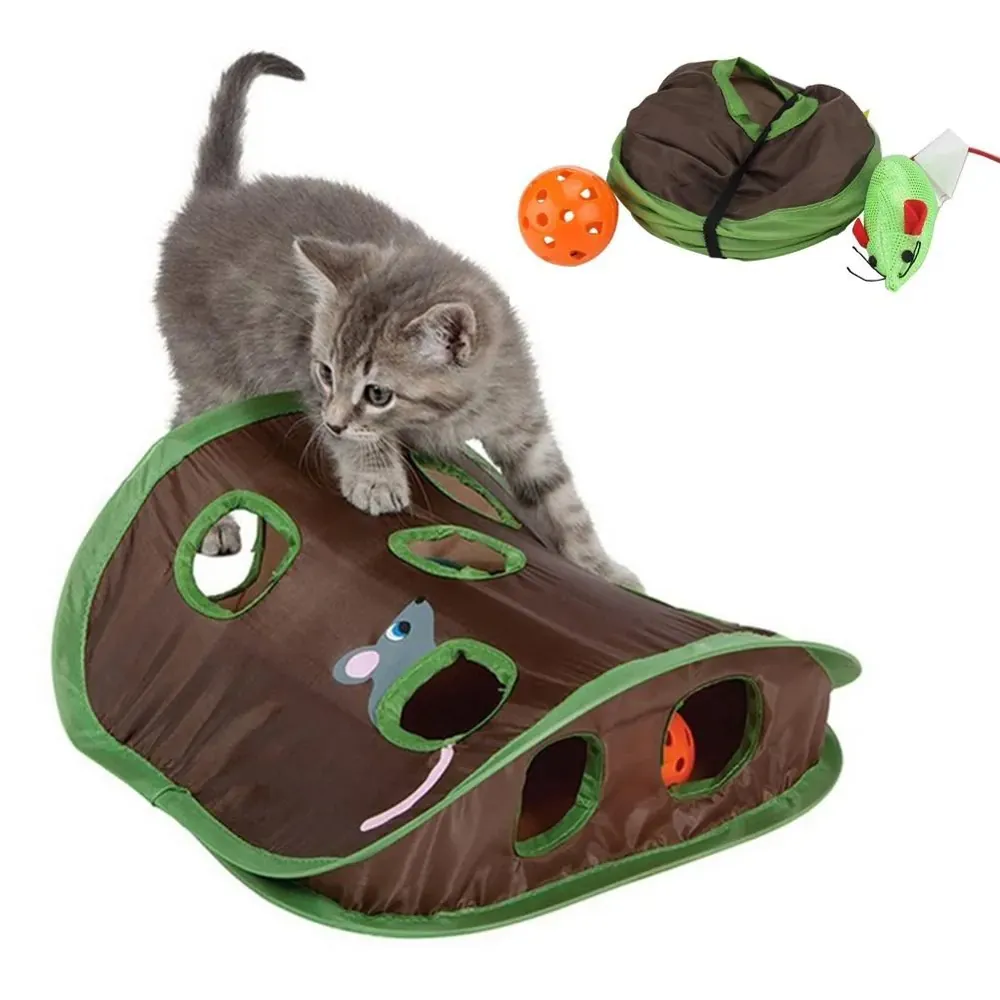
The hide-and-seek mouse game
The hide-and-seek mouse game is a play mat with nine holes and a mouse and ball hidden underneath. Your cat slips a paw in to catch them.
 At CozzzypetsHide-and-seek mouse game
- Best for: curious cats, kittens and adults alike, and multi-cat homes.
- Care: machine-washable canvas; folds flat.
- Good to know: perfect for the "stalk" stage, and for days when you can't play for long.
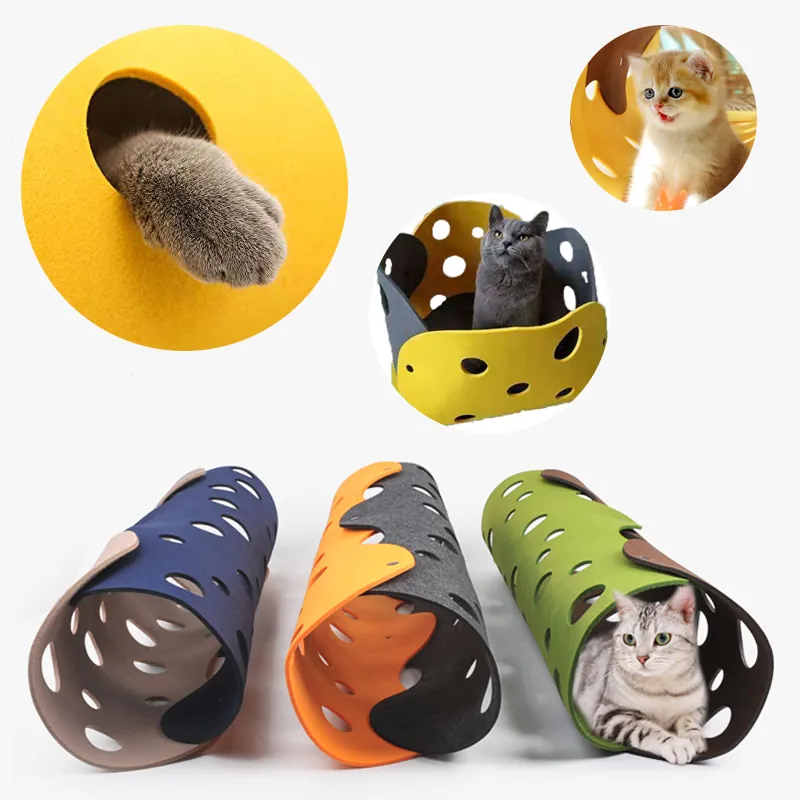
The collapsible tunnel
The collapsible cat tunnel is made of thick 5 mm felt with small windows. A hiding spot, ambush zone and racetrack in one.
 At CozzzypetsCollapsible cat tunnel
- Best for: the cat who loves hiding and pouncing on whatever goes by.
- Good to know: drag the wand past the tunnel windows; opened flat, it doubles as a play mat.
The 4-level ball tower
The 4-level cat ball tower has four tracks where balls roll under their paws, topped with a catnip ball and a feather wand.
- Best for: the cat who's alone part of the day.
- Colours: blue, mint, salmon pink, mauve or soft green; non-slip base.
- Good to know: it doesn't replace your sessions, but it keeps them busy in between.
The hanging spring pompom
The hanging spring pompom hooks onto a door handle or furniture. At the slightest swat, it bounces and swings.
- Best for: the cat who loves batting and jumping at anything that moves.
- Good to know: supervise play and put it away when you're out.
The cactus scratcher tumbler
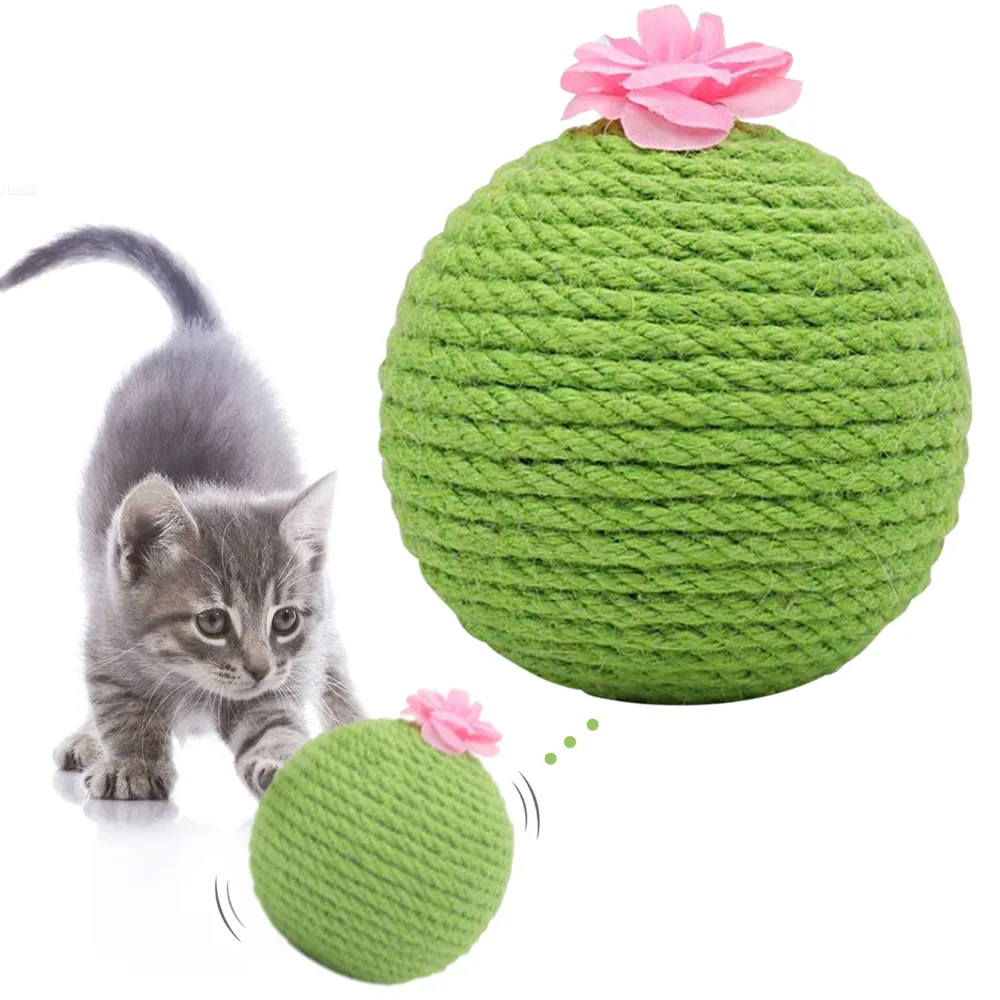
The cactus scratcher tumbler is a ball of about 10 cm covered in sisal, with catnip inside: it can be scratched, swatted and rolled.
- Best for: the cat who likes scratching and playing at the same time.
Want a ready-made set? The Playful Cat Set brings together the tunnel, the cactus tumbler and the hide-and-seek game, and our Playful cat page gathers our ideas.
Which one should you choose?
- For your daily sessions together: the wand, unbeatable for acting like prey.
- Alone part of the day? The ball tower or the spring pompom.
- Loves hiding? The tunnel, combined with the wand.
- Several cats? The hide-and-seek game, where everyone can slip a paw in.
- Scratches everything while playing? The cactus tumbler, to scratch and roll.
Frequently asked questions
My cat attacks my ankles. Why?
It's often pent-up energy. Regular play sessions, especially in the evening, help a lot. Never play with your hands: they'd learn hands are prey.
When should I play?
Morning and evening, when cats are naturally more active. The evening session, followed by a small meal, is often the most useful.
My cat won't play. Is that normal?
Some cats are calmer or prefer one type of toy. Try slower movements along the floor and different toys. If they suddenly stop playing, see your veterinarian.
Are laser pointers a good idea?
Many cats get frustrated never being able to catch the dot. If you use one, always end the session on a toy they can actually catch.
How many toys does a cat need?
A few are enough, as long as you rotate them. Keep 3 or 4 within reach and put the others away for a few days.