Introducing a cat and a dog: steps to a happy home together
Published October 26, 2026 · Updated November 16, 2026

In short : Go slowly: swap their scents first, let them see each other through a gate, then hold short meetings with the dog on a leash and the cat free to leave. Depending on the pet, it takes a few days or a few weeks.
This article contains affiliate links: if you buy through them, Cozzzypets may earn a small commission at no cost to you. As an Amazon Associate, we earn from qualifying purchases.
To introduce a cat and a dog, work in stages: scents first, then seeing each other at a distance, then short meetings with the dog on a leash and the cat free to walk away. Most pairs get along very well, as long as nothing is rushed. Depending on the animals, it takes anywhere from a few days to several weeks.
This method follows advice from the ASPCA and American Humane, two well-known animal welfare organizations. It works whether a puppy is joining a cat or a kitten is joining a dog.
Why go slowly?
Dogs and cats don’t speak the same language. A dog who wants to play charges in, jumps and wags. To a cat, something charging is a threat, and a swishing tail means irritation. Without preparation, the dog chases, the cat runs or swats, and each learns that the other is trouble.
A bad first impression can be fixed, but it takes a long time. A series of calm little meetings, on the other hand, builds a habit quickly: "when the other one is around, nothing bad happens, and I even get treats." That’s exactly what we’re after.
The ASPCA also points out that temperament matters more than breed: a calm dog who listens well and a confident cat have a head start. A dog who chases anything that moves will need more time and supervision.
Before they meet: set up the house
A territory just for the cat
The cat must be able to get away from the dog at all times. This is the most important rule.
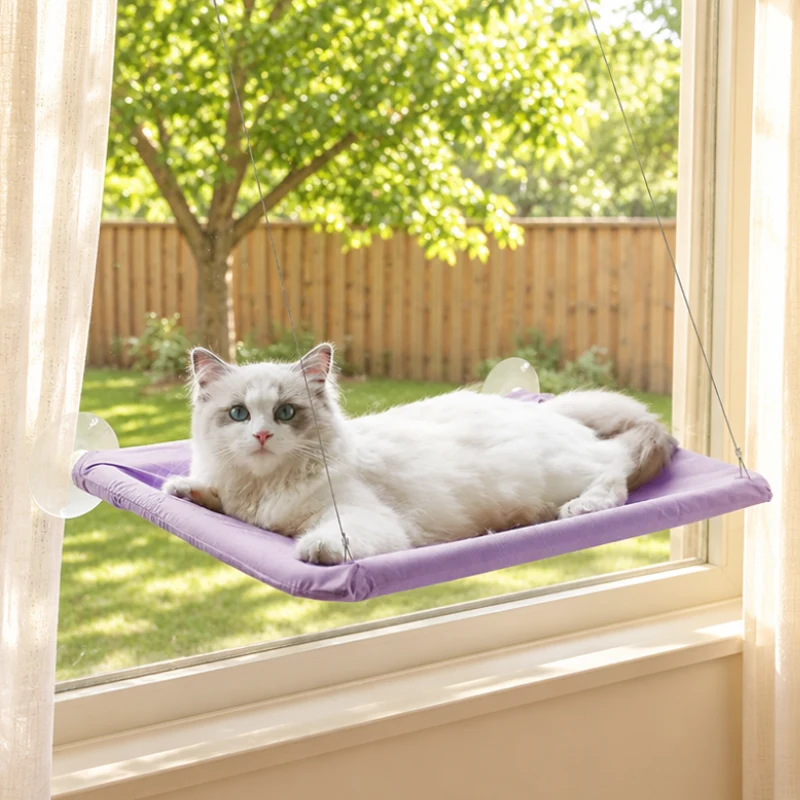
- Height. Cats feel safe up high, where they can watch without being bothered. A framed cat hammock, a window ledge or the cleared top of a bookshelf all make good lookouts.
- Hiding spots. A foldable cozy house in a quiet corner gives them somewhere to retreat.
- A room of their own. Pick a room the dog won’t visit at first: a bedroom or office, with litter, water, food and a bed.
 At CozzzypetsFramed cat hammock
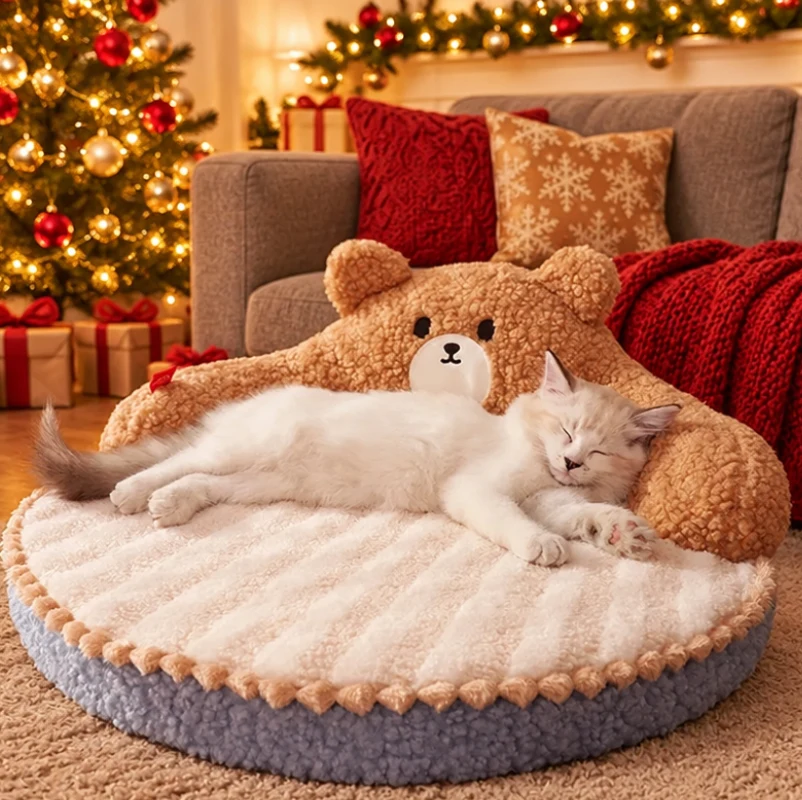
 At CozzzypetsFoldable teddy bear houseFrom
Litter and food out of reach
Many dogs are drawn to cat food and to the litter box. Put the bowls up high or in the cat’s room, and the litter somewhere the dog can’t go. A cat who is disturbed while eating or using the litter box may start avoiding those spots.
A dog who has had exercise
A dog who has just walked or played is far calmer than one full of energy. Plan a good walk before every session. Brush up on the basics too: "sit," "stay" and "look at me" will be useful at every stage.
Step 1: scents first
For the first few days, keep the two animals in separate rooms with the door closed. They can hear and smell each other under the door, and that’s already a first introduction.
- Swap blankets. Rub a soft cloth on the cat’s cheeks and place it near the dog’s bed, then do the reverse. Each one discovers the other’s scent without seeing them.
- Swap rooms. While the dog is out for a walk, let the cat explore the rest of the house. Then let the dog sniff around the cat’s room while the cat is elsewhere.
- Feed them on either side of the door. Set the bowls well back from the door, then move them a little closer at each meal. The other’s scent becomes linked to something pleasant.
Move on when both eat calmly near the door, with no growling, hissing or scratching.
Step 2: seeing without touching
The idea: they can see each other, but neither can reach the other. A mesh dog gate hung across a doorway works for these supervised sessions. Still keep the dog on a leash the first few times, in case they lunge.
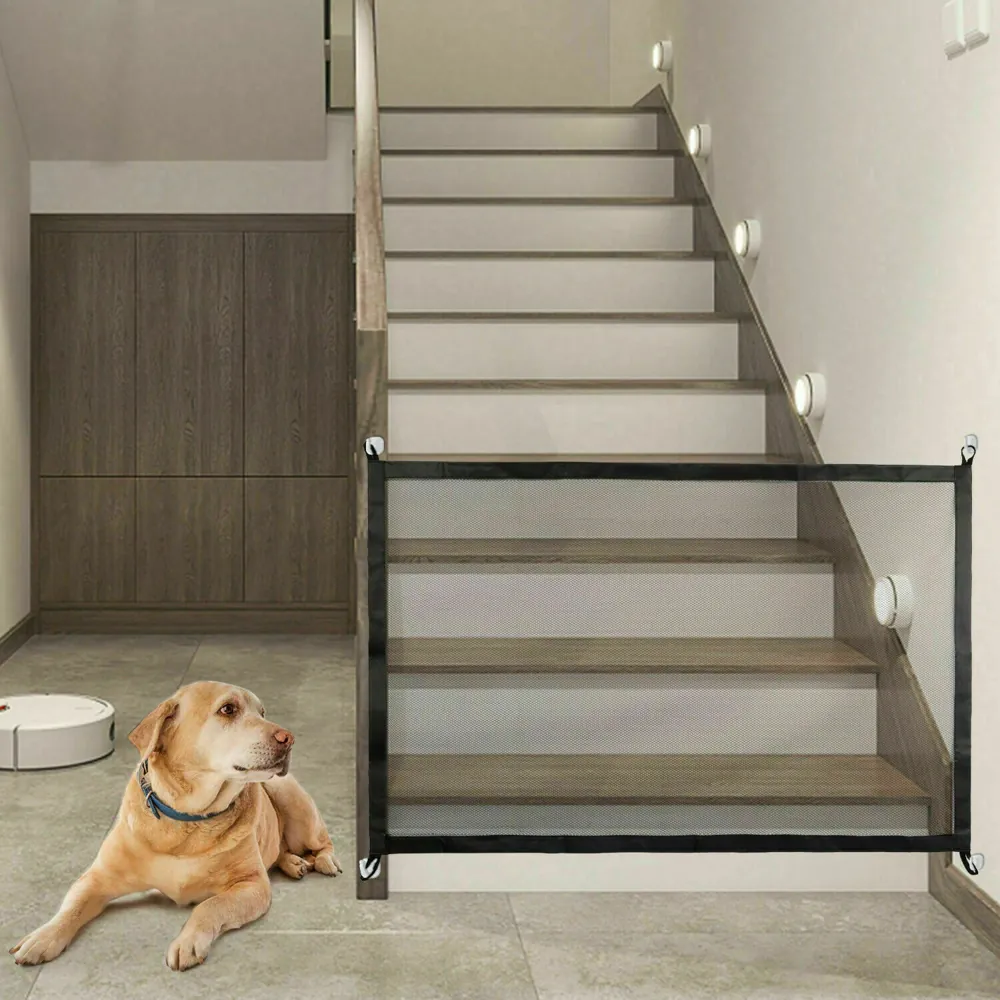 At CozzzypetsMesh dog gate
- Keep the dog well back from the gate at first, and reward them every time they look at the cat and then turn back to you.
- Give the cat treats on their side, or play with them.
- Keep sessions short: a few minutes, several times a day.
- Move a little closer each day, only if everyone stays relaxed.
Signs it’s going well
The dog sniffs, looks away, lies down or responds to their name. The cat eats, grooms, comes closer out of curiosity or settles in to watch.
Signs you should back up
The dog stares at the cat and can’t look away, freezes, whines, barks or pulls toward the gate. The cat flattens their ears, puffs up, hisses, growls or stays hidden. If so, add distance or go back to the scent stage for a few days. It isn’t a failure: it’s simply their pace.
Step 3: first meetings in the same room
When gate sessions have become boring for everyone, that’s a good sign. You can move to the same room.
- The dog is on a leash, ideally with a harness. For a small dog, our adjustable dog harness goes on easily (leash not included).
- The cat is free. Don’t hold them in your arms or shut them in a carrier in the middle of the room: they need to be able to leave and climb.
- Let the cat choose the distance. If they come closer, great. If they stay on their perch, that’s fine too.
- Reward the dog for being calm: sitting, lying down, looking at you.
- End before things go wrong. Five peaceful minutes beat twenty that end in a chase.
Repeat every day, slowly lengthening the sessions. Once the dog stays relaxed, let the leash drag on the floor: you can step on it if needed.
Step 4: living together
Gradually increase their time together, always while you’re there. Until you’re sure they get along, separate them when you leave the house or overnight: a closed door is enough.
Keep a few rules for good:
- Separate play times. The cat hunts with their hide-and-seek mouse game, the dog plays with their own toys. Each burns energy in their own way.
- Separate meals, each in their own corner.
- High-up refuges that stay in place, even once things are going well.
- A bed for each. Some pairs end up sleeping side by side. Others prefer to keep their distance, and the cat will be happy to have a teddy bear cozy nest all to themselves.
Living together successfully doesn’t have to mean a great friendship. Two animals who politely ignore each other is already a win.
Frequently asked questions
How long does it take for a cat and a dog to get used to each other?
From a few days to several weeks, sometimes a few months for a fearful cat or a very excitable dog. Go by their behaviour rather than the calendar: you move to the next step when both are relaxed.
My cat hisses at the dog. Is that bad?
No. Hissing or swatting is their way of saying "no closer." Add distance, go back a step and move more slowly. If the cat stops eating, hides constantly or avoids the litter box, talk to your vet.
My dog only wants to play. Can I let them?
Not if they run after the cat. Redirect them to a toy, ask for a "sit" and reward them once they settle. The goal is for the dog to learn that the cat is not a toy.
Can I leave them alone together?
Only once they’ve spent several weeks together with no chasing or tension while you’re there. When in doubt, separate them while you’re out.
What if nothing works?
If the dog stays fixated on the cat despite several weeks of work, or if either one seems unhappy, ask your vet or an animal behaviour professional who uses gentle methods for help.
Sources: ASPCA, Introducing Dogs to Small Pets and Cats · American Humane, Introducing Dogs to Cats