Hands-free leash: who it’s for and how to use it right
Published October 26, 2026 · Updated November 16, 2026
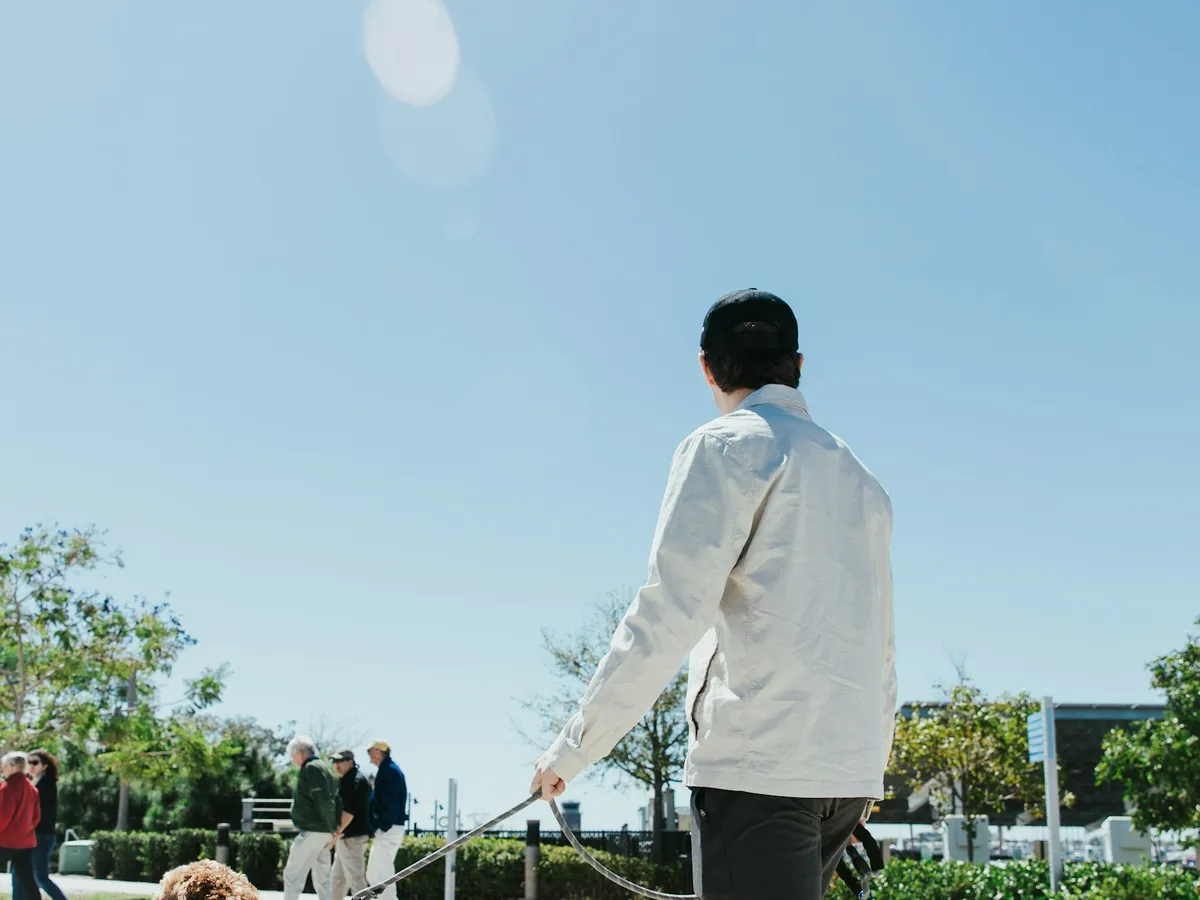
In short : It suits runners, parents with a stroller and dogs who already walk well on a leash, but not dogs who pull very hard, puppies or icy sidewalks. Use it with a harness, with the belt on your hips.
A hands-free leash suits people who run, walk briskly or push a stroller with a dog who already walks well on a leash. It’s worn around the hips like a belt and frees both of your hands. On the other hand, it isn’t made for a dog who pulls very hard, a puppy who’s still learning or icy sidewalks.
Here’s how to tell whether it’s right for you, how to adjust it and the rules for using it safely.
How does a hands-free leash work?
It has two parts: an adjustable belt that buckles around you, and a leash that attaches to it. Most models have a bungee section that absorbs the jolt when the dog speeds up or stops suddenly.
Our hands-free leash is a neoprene running belt lined with padded mesh that adjusts from 71 to 122 cm (28 to 48 in.). The bungee leash stretches from 99 to 136 cm. The belt includes a zippered waterproof phone pouch, a treat pouch and an elastic bottle holder, and its stitching is reflective.
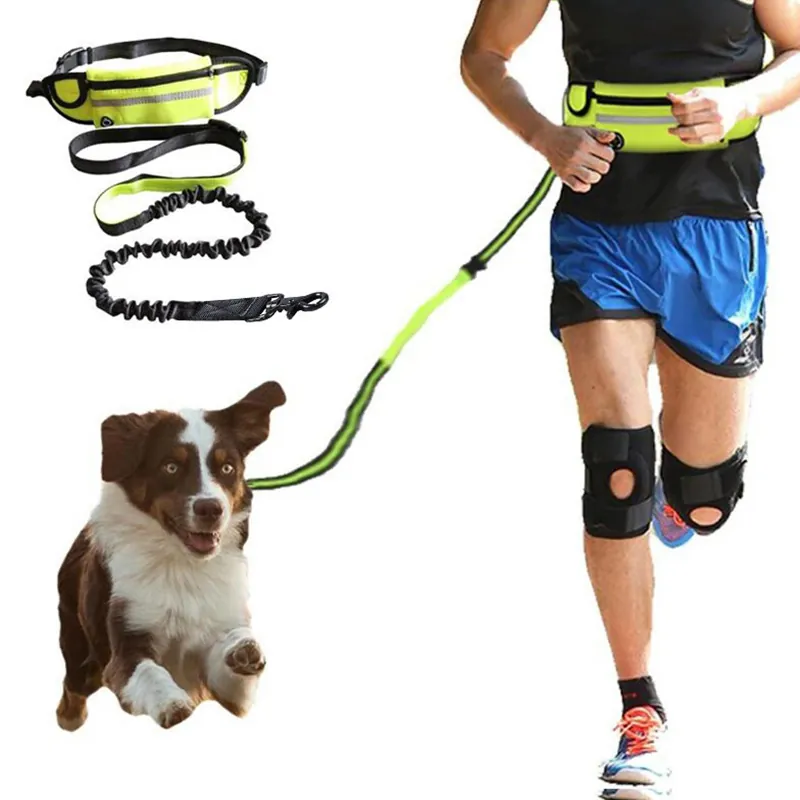 At CozzzypetsHands-free leash
The main advantage: the pull is spread across your pelvis, the most stable part of your body, instead of one arm and shoulder. And your arms swing naturally when you run.
Who is it a good idea for?
Runners
This is what it was designed for. Holding a leash in your hand while running throws off your stride and tires your shoulder. With a belt, you run normally and the bungee absorbs the small differences in pace between you and your dog.
Parents with a stroller
Pushing a stroller with one hand and holding a leash with the other is neither comfortable nor very safe. The belt solves that, as long as the dog walks calmly. Never attach the leash to the stroller itself.
Walkers and hikers
On the trail, free hands let you use walking poles, keep your balance on a descent or simply take a drink without stopping. Always check whether leashes are required on the trail: they often are.
Anyone with their hands full
A coffee, an umbrella, grocery bags, a phone call to answer: day to day, the belt makes the walk simpler.
Who it’s not ideal for
Let’s be honest: this leash doesn’t suit every team.
- A dog who pulls very hard. If your dog already drags you along when you hold the leash in your hand, they’ll throw you off balance even more easily from the waist. Work on leash walking first.
- A reactive dog. A dog who lunges at other dogs, squirrels or bikes can pull you over. With that dog, keep a leash in your hand and plenty of distance.
- A puppy who’s learning. The first weeks of leash walking call for gentle, precise guidance, which is easier by hand.
- A dog much heavier than you can hold back. Proportion matters: a big, powerful dog attached to a light person is a risk.
- Icy sidewalks. In winter, one lunge on a patch of ice is enough for a fall. On freezing-rain days, go back to the regular leash.
Using it right: 6 rules
1. Wear the belt on your hips
Not at the waist, around your belly: lower, on your hip bones. That’s where your centre of gravity is, so you absorb a lunge better. Tighten it enough that it doesn’t spin, without restricting your breathing.
2. Clip the leash to a harness
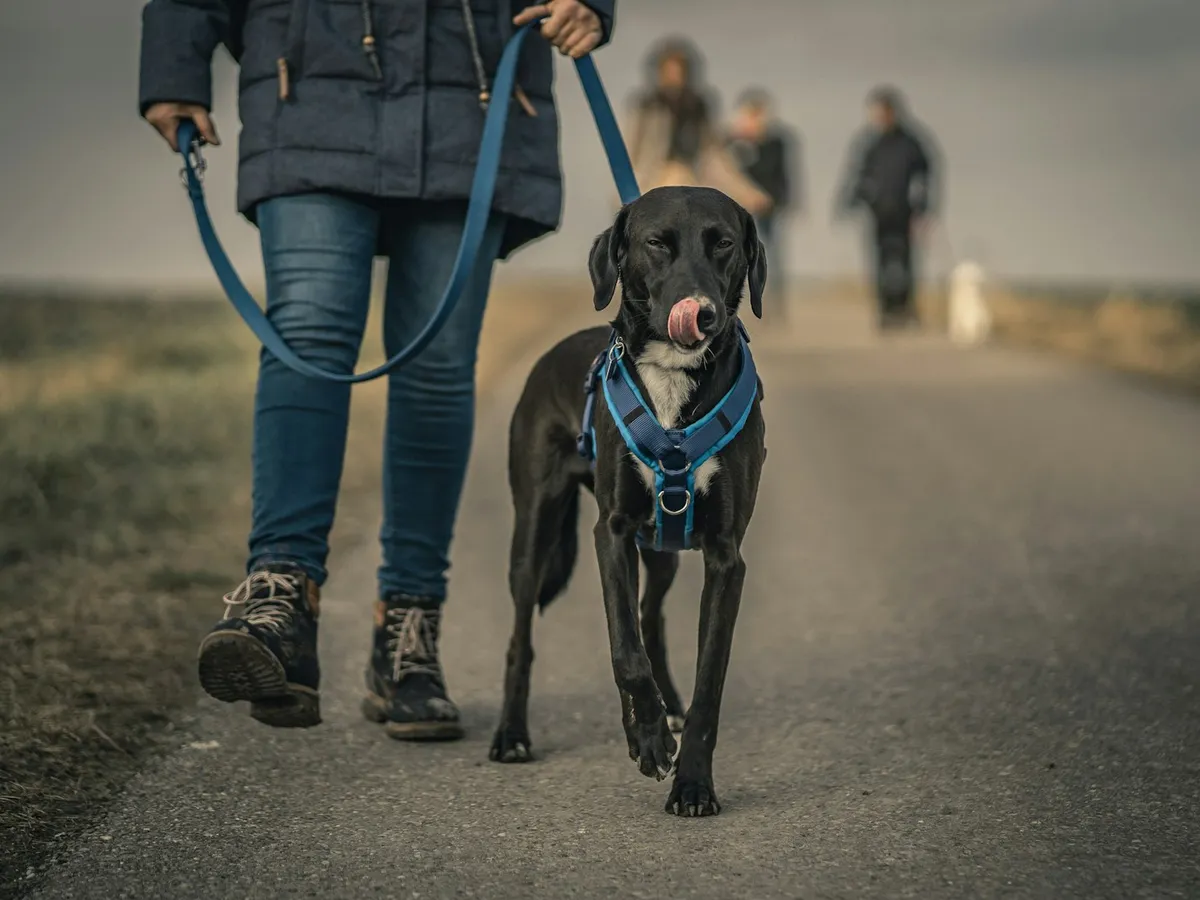
With a waist leash, you don’t always feel tension as precisely as you do by hand. A harness spreads pressure across the chest rather than the neck. Our adjustable harness adjusts at the neck and chest; to compare the options, read Harness or collar for walking your dog?.
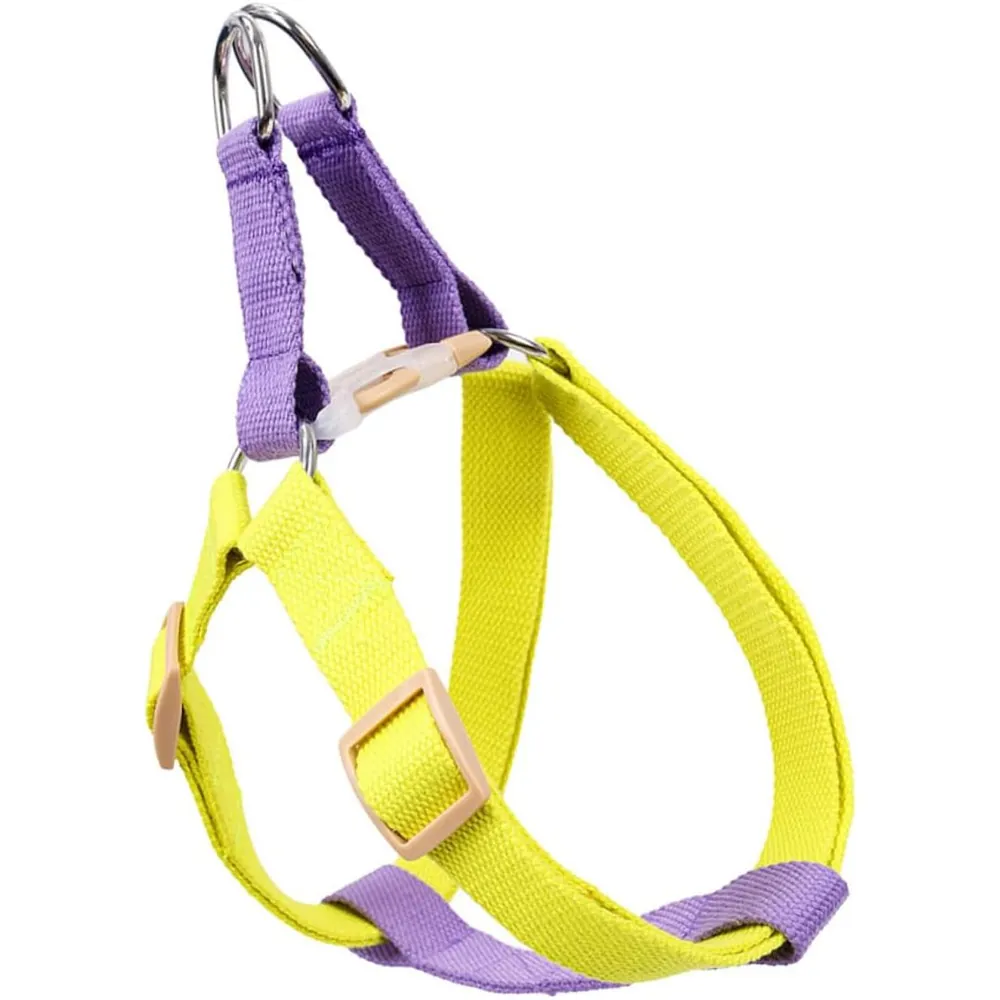 At CozzzypetsAdjustable dog harness
3. Keep one hand ready
“Hands-free” doesn’t mean “unsupervised.” When you approach an intersection, another dog or a narrow passage, grab the leash near the clip to keep your dog close.
4. Pick a side
Teach your dog to always walk on the same side, left or right. They’re less likely to cross in front of your feet, and you always know where they are.
5. Start by walking
Do your first outings at a walk, somewhere quiet, before trying a run. You’ll both learn how the leash responds.
6. Stay visible
In the evening, the belt’s reflective stitching helps, but add a light for your dog if you’re walking near traffic.
Running with your dog: build up gradually
If you want to run with your dog, building up matters as much for them as it does for you.
- Wait until they’ve finished growing. The American Kennel Club notes that sustained running isn’t recommended for puppies, whose bones and joints are still developing. The age varies by breed and size: your veterinarian can tell you when to start.
- Consider their build. Short-nosed dogs breathe less easily during exercise, and some breeds are built for sprinting rather than endurance.
- Alternate walking and running for the first few weeks, a few minutes at a time, then lengthen slowly.
- Watch the temperature. Dogs don’t shed heat well. In hot weather, run early in the morning or stick to walking.
- Bring water. The 2-in-1 water bottle works as a bottle and a bowl and slips into a bag.
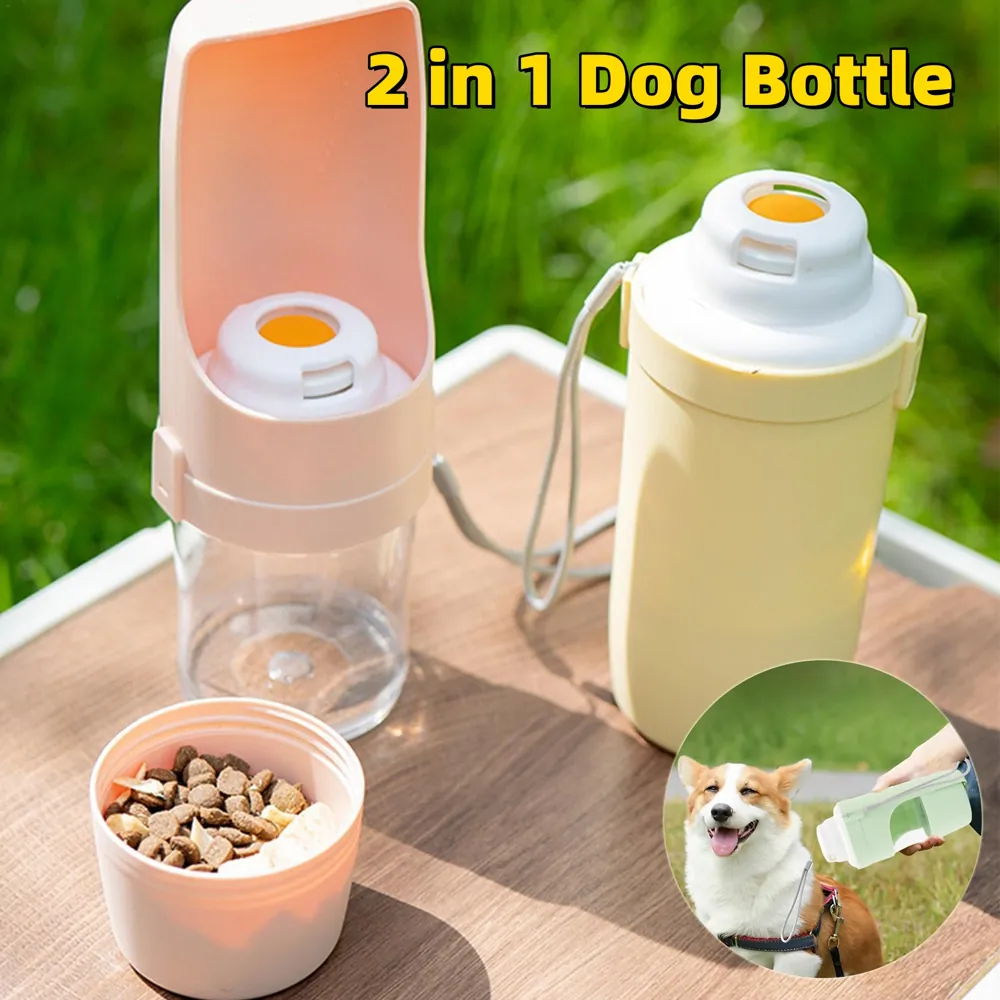 At Cozzzypets2-in-1 walking water bottle
A dog who slows down, lags behind you, pants heavily or lies down is telling you they’ve had enough. Stop, walk and head home.
Getting the length right
A leash that’s too long lets the dog cross in front of your feet or wrap around a post. Too short, and it cramps the dog and tugs at you with every step. The right length: your dog walks beside you with the leash slightly slack, not dragging on the ground. The bungee section does the rest.
Before every outing, check three things: the belt buckle is fully closed, the clip is securely attached to the harness and the poop bags are in the pouch.
Which one should you choose: hands-free or regular leash?
- You run or walk briskly with a dog who’s calm on leash: the hands-free leash.
- You walk a puppy, a puller or a reactive dog: a regular leash held in your hand, with a harness.
- You do both: keep both by the door and choose based on the outing and the weather.
For more outing accessories, see our Active dog page and our checklist What to pack for a dog walk.
Frequently asked questions
Can I use a hands-free leash on a bike?
No. A hands-free leash isn’t designed for bikes, scooters or skates: at those speeds, a swerve from the dog can cause a serious fall.
Is a hands-free leash suitable for a large dog?
Yes, if they walk calmly on a leash and you’re able to hold them back. For a large dog who pulls, work on leash walking with a regular leash first.
What length should I choose?
One that leaves a little slack without letting the dog cross in front of your feet. A bungee section helps keep the right distance and softens changes of pace.
Can I walk two dogs with a hands-free leash?
It’s possible with two calm dogs who are well used to each other, but the pull doubles. Start with one dog, and only try two if each walks very well alone.
Should I use a harness or a collar with this type of leash?
A harness, preferably. Because the leash is attached to your waist, jolts are harder to moderate than by hand; a harness spreads them across the chest instead of the neck.