Best toys for a teething puppy: how to choose
Published November 12, 2026
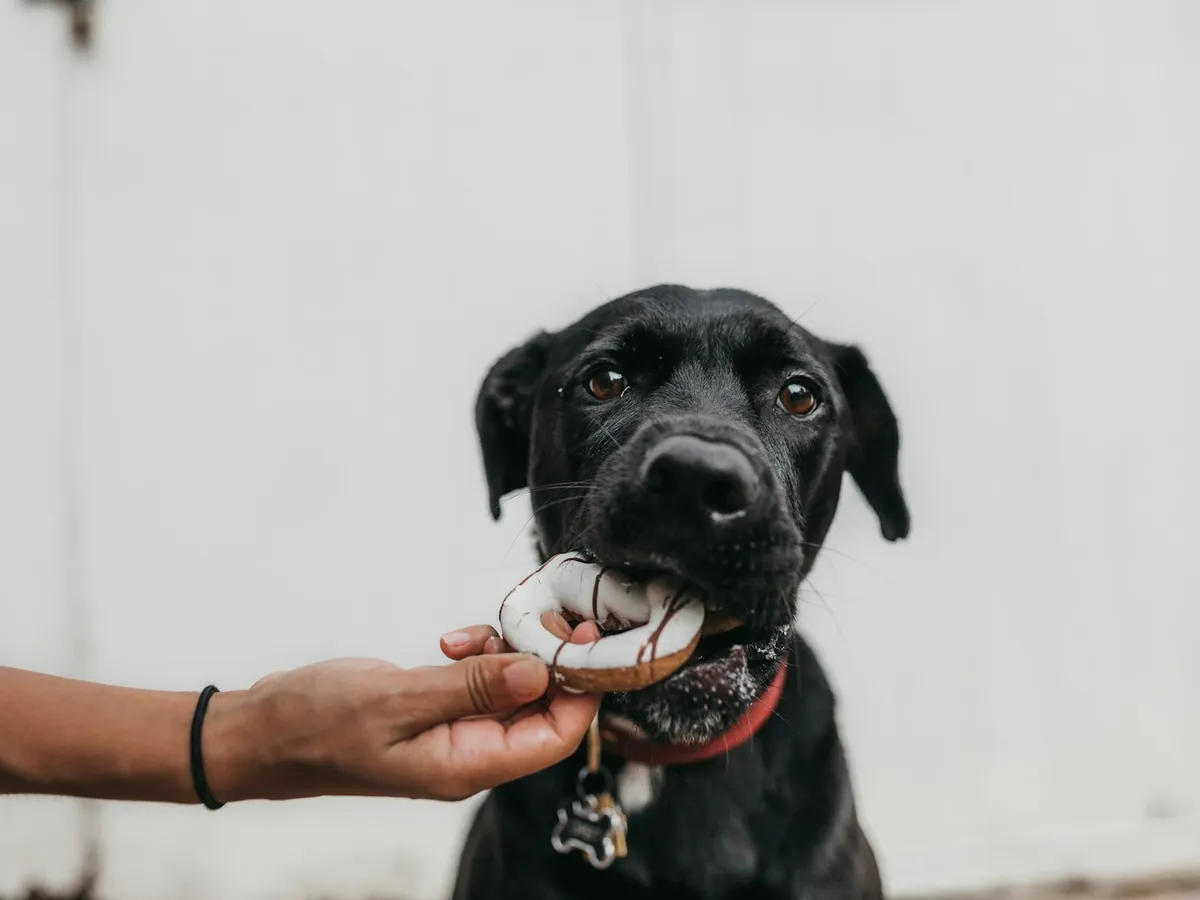
In short : A puppy's adult teeth come in from about 3 to 7 months. Offer several approved toys in different textures, like rubber, rope or plush, sized for your puppy, rotate them every few days and always play under supervision.
The best approach for a teething puppy is to offer several approved toys in different textures (ridged rubber, rope, no-stuffing plush), sized for your puppy and always used under supervision. The goal isn't to find one perfect toy, it's to give enough good options that your shoes and the table legs stop looking so tempting.
If a puppy is joining your family for Christmas, this is exactly the age when they chew everything. Here's what's happening in their mouth, how to organize their days, and the toys that work best for each kind of puppy.
Puppy teeth: what happens and when
Puppies first get baby teeth, which are very sharp. According to the U.S. Department of Agriculture (USDA), a puppy has all 28 baby teeth by about 8 weeks. Adult teeth start replacing them around 2 to 4 months, beginning with the incisors, and a dog has its full set of 42 adult teeth by about 7 or 8 months.
In practice, the heaviest chewing period usually runs from about 3 to 7 months. You may find a tiny baby tooth on the rug or in their bed. That's normal, and puppies often swallow them without anyone noticing.
If a baby tooth seems to stay in place next to an adult tooth, if the gums bleed a lot, or if your puppy won't eat, see your veterinarian.
Why puppies chew everything
For a puppy, chewing is exploring, playing and passing the time all at once. While teeth are coming in, that urge gets stronger. A puppy chewing your furniture isn't being "bad." They simply haven't learned yet what's allowed and what isn't.
The good news: they learn quickly when you go about it the right way.
A 6-step plan to protect your home
1. Put away what shouldn't be chewed
Shoes, cables, remotes, kids' toys, socks: anything on the floor becomes a potential toy. For the first few months, a puppy-proofed room or corner saves you a lot of surprises. A gate or playpen helps keep them there when you can't watch.
2. Always keep an approved toy within reach
When they grab your pant leg or a cushion corner, calmly say "no," then immediately offer an approved toy. Praise them as soon as they take it. They learn the trade: "not that, this."
3. Mix up the textures
Some puppies prefer firm rubber, others a rope you can tug, others a plush toy that makes noise. Offer a few and watch what they pick.
4. Rotate the toys
Leave 3 or 4 toys out and put the rest away. Swap them every two or three days: a toy that "comes back" feels brand new.
5. Play with them, not just next to them
A few minutes of tug, several times a day, burns energy and builds your bond. If they nip your hands, calmly pause the game, then start again with the toy.
6. Plan for naps
A tired puppy nips more. Like a toddler, they need a lot of sleep. A quiet corner with a cozy bed helps them rest between play sessions.
Our toys for a teething puppy
These are the toys in our shop that suit this stage best. No toy is indestructible: pick a size that fits your puppy, play under supervision, and remove any toy as soon as it's damaged.
The tough chew toy
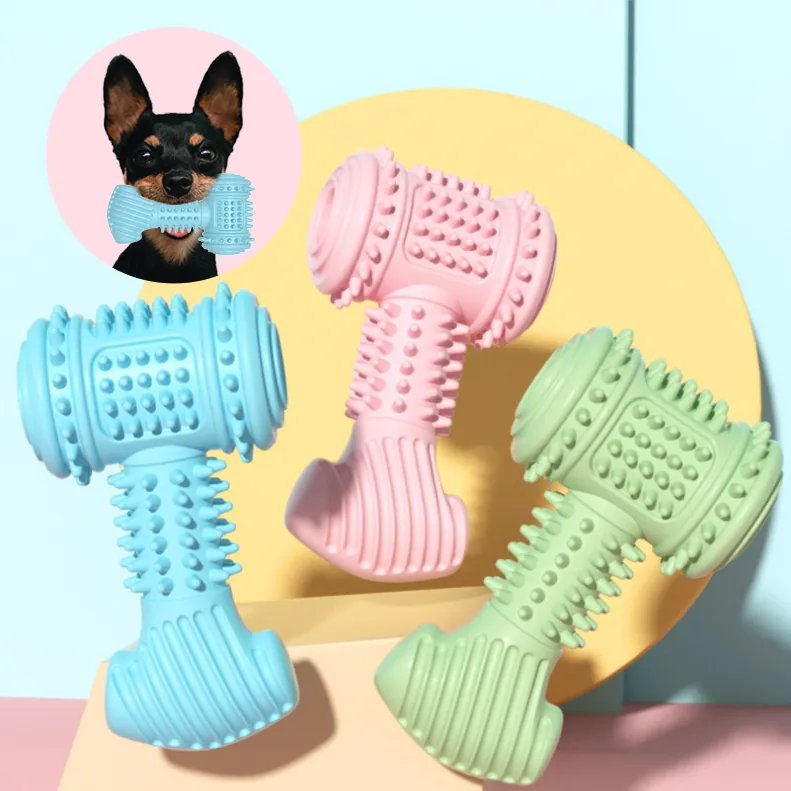
Our tough chew toy is a hammer-shaped bone made of thermoplastic rubber (TPR), covered in small ridges and easy to grab.
 At CozzzypetsTough chew toy
- Best for: the puppy who wants something firm and goes after chair legs.
- Size: about 80 g, a good fit for small mouths.
- Colours: blue, pink or green.
- Good to know: replace it as soon as a piece comes off.
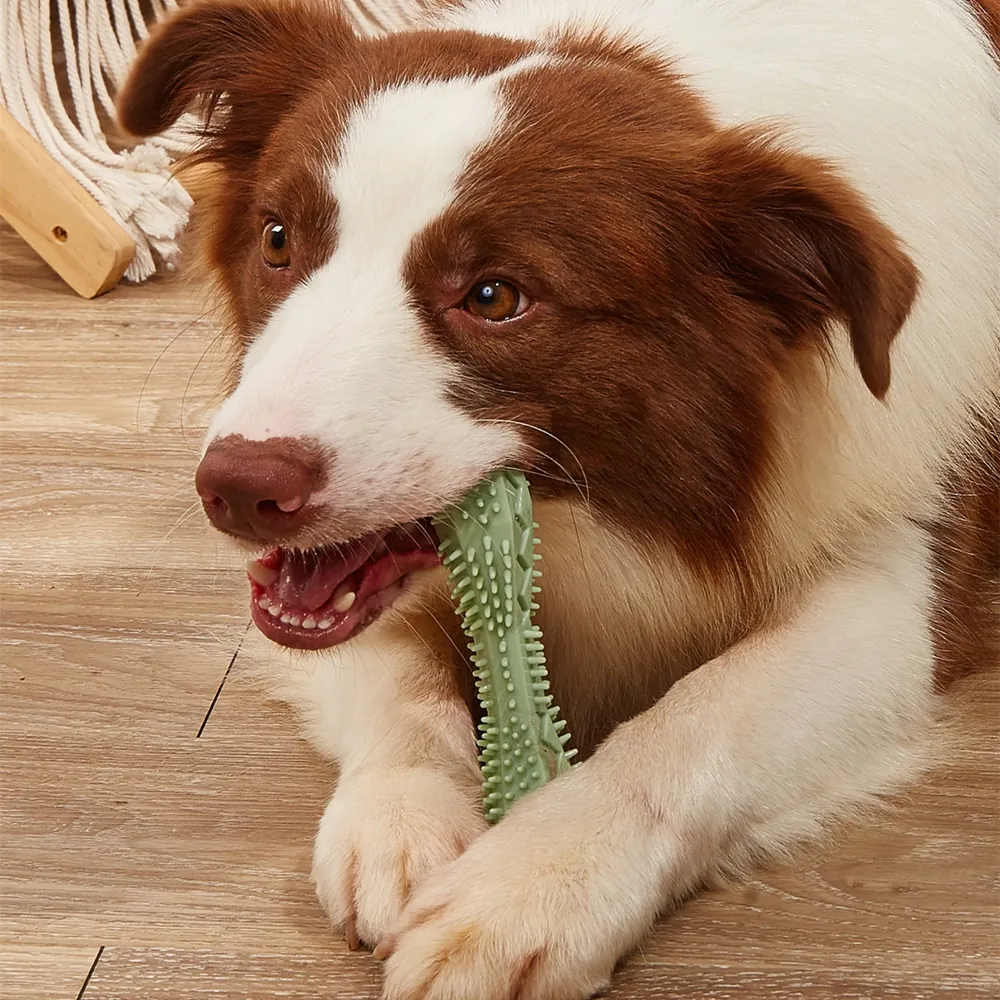
The ridged chew stick
The ridged chew stick is rubber, covered in nubs and zigzag ridges. Its hollow centre can hold a little dog-safe paste to make the activity last longer.
 At CozzzypetsRidged chew stick
- Best for: the puppy who likes to chew for a long time, quietly in their corner.
- Colours: green, blue or pink.
- Good to know: great for moments when you want them calmly busy near you.
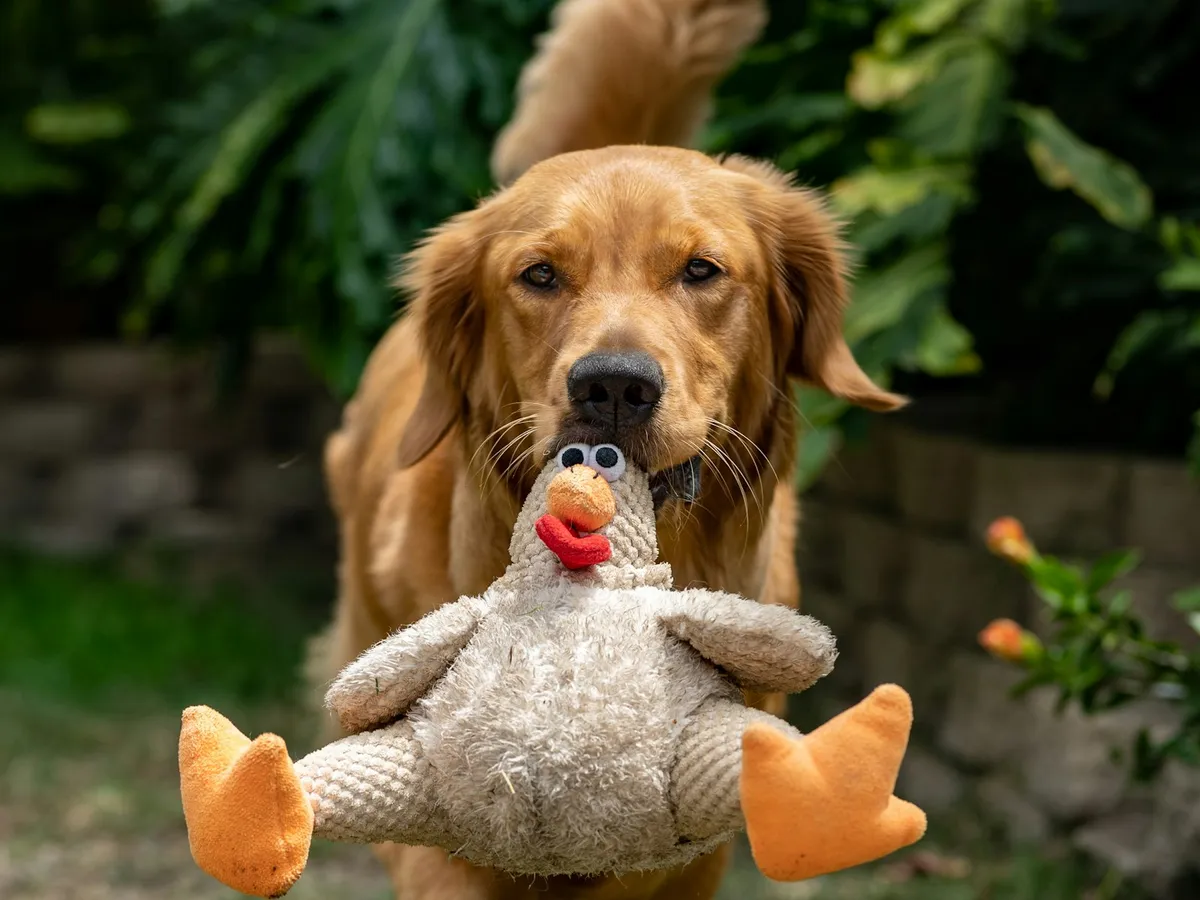
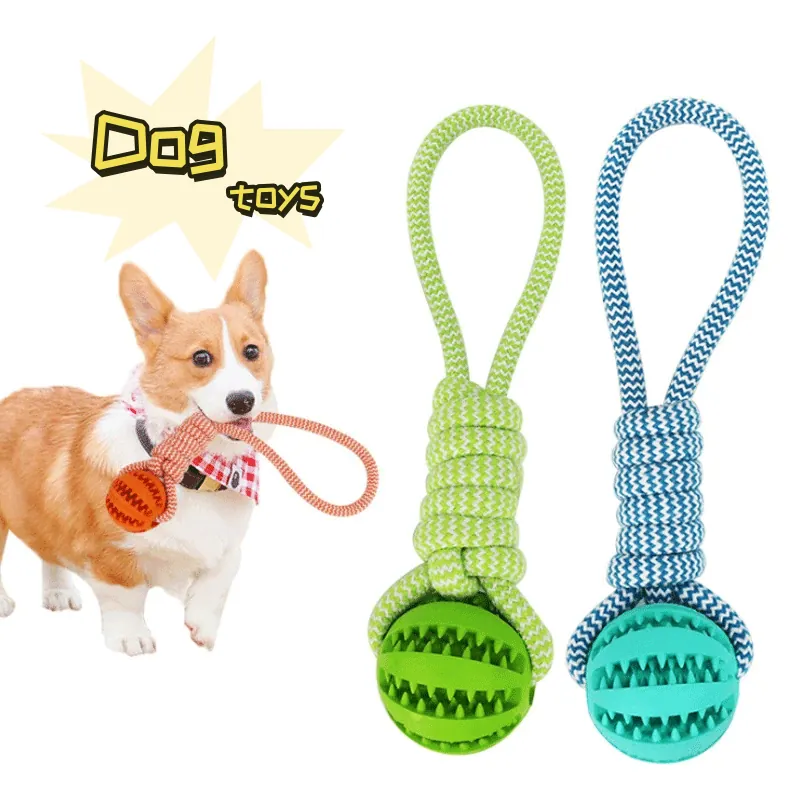
The rope tug toy with ball
The rope tug toy with ball is a braided cotton rope loop ending in a grooved rubber ball.
 At CozzzypetsRope tug toy with ballFrom
- Best for: the small or medium puppy who loves playing with you.
- Size: about 25 cm long, ball about 7 cm, about 132 g.
- Care: remove it once the rope starts fraying so they don't swallow fibres.
- Good to know: perfect for teaching them to bite the toy instead of your hands.
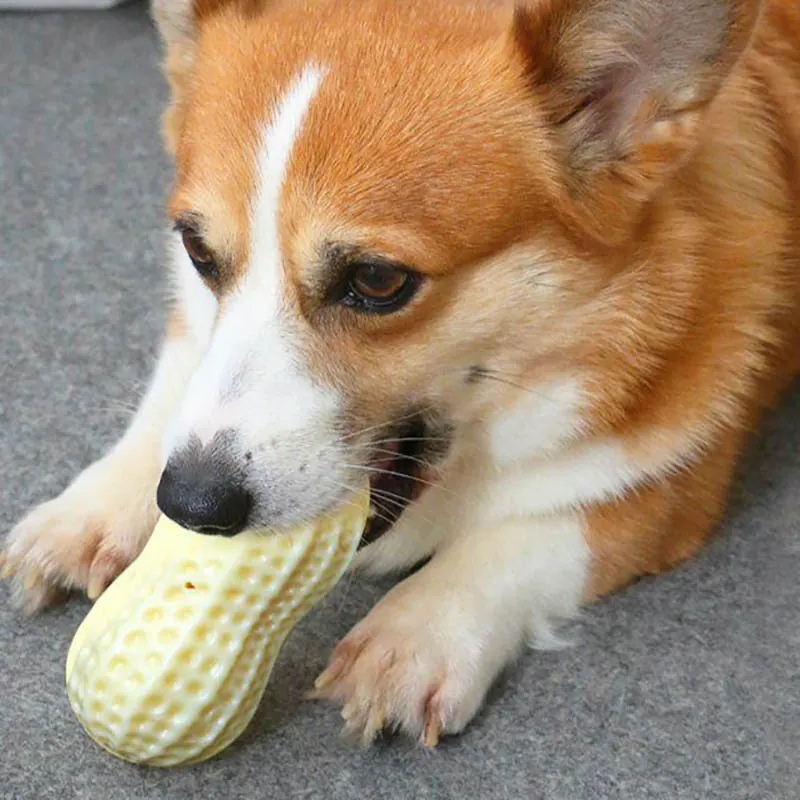
The squeaky rubber peanut
The squeaky rubber peanut is soft natural rubber with a built-in squeaker, for chewing, tossing or fetching.
- Best for: the puppy who prefers a softer texture and loves noisy toys.
- Size: about 14 x 8 cm; single or 2-pack.
- For: small and medium dogs.
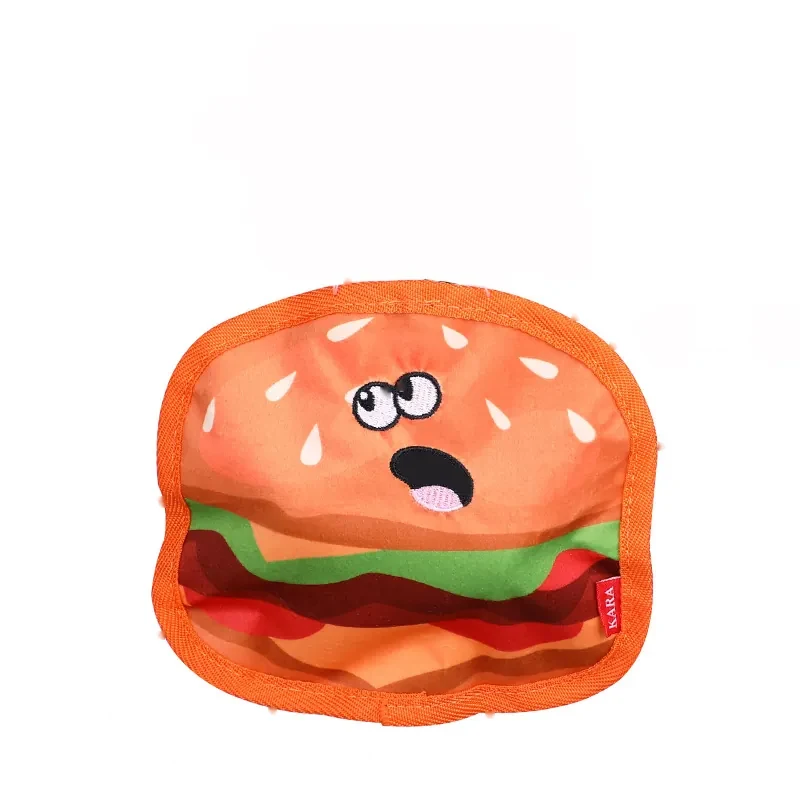
The no-stuffing snack plush
The no-stuffing snack plush comes as a burger, hot dog, pizza slice or popcorn. It squeaks and crinkles thanks to crumpled paper hidden inside.
- Best for: the puppy who likes to carry their toy around and nap with it.
- Good to know: not for heavy chewers; with no stuffing, there's nothing to clean up all over the living room.
Welcoming a new companion? Our New puppy page gathers everything you need to get started, and our article on the first days with a puppy walks you through week one.
Which one should you choose?
- Going after furniture and chairs? The tough chew toy, firm and easy to grab.
- Want them busy on their own, calmly? The ridged chew stick with a little paste inside.
- Nipping your hands during play? The rope tug toy: you play together, mouth on the rope.
- Prefers soft and squishy? The no-stuffing plush or the squeaky peanut.
- Not sure what they like yet? Pick two different textures, one rubber and one rope, and watch.
For an adult dog who destroys toys in minutes, read our article on toys for dogs who destroy everything instead.
Frequently asked questions
At what age do puppies start teething?
Adult teeth start replacing baby teeth around 2 to 4 months, and a dog has all 42 adult teeth by about 7 or 8 months. The heaviest chewing usually happens between 3 and 7 months.
Is it normal for a puppy to lose teeth?
Yes. Baby teeth fall out to make room for adult teeth. If a baby tooth stays in place next to an adult tooth, mention it to your veterinarian.
How do I stop my puppy from biting my hands?
Never use your hands as toys. When they bite, calmly stop the game for a few seconds, then start again with a toy. They quickly learn the fun only continues when they bite the toy.
How many toys does a puppy need?
Four or five toys in different textures are plenty. Leave three or four within reach and rotate them every two or three days.
Can I give my puppy a very hard toy?
Choose a toy suited to their size and age, and ask your veterinarian if you're unsure. Remove any toy that's damaged or small enough to swallow.