Are cat window hammocks safe? The installation guide
Published October 26, 2026 · Updated November 16, 2026
In short : Yes, if it’s installed properly: on smooth, clean, crack-free glass, within the weight limit, with suction cups checked every week. For a heavy or senior cat, a bed on a stable surface is a good alternative.
Yes, a cat window hammock is safe when it’s installed properly: on smooth, clean, crack-free glass, with suction cups applied correctly, a weight within the model’s limit and a check every week. Nearly every fall comes down to dirty glass, a poorly pressed suction cup or a hammock nobody has checked in months.
Here’s how to choose the right window, install the hammock step by step and maintain it so your cat can enjoy it for a long time.
Why cats love window hammocks so much
An indoor cat spends a good part of the day watching. The window is their television: birds, squirrels, passersby, falling snow. Feline behaviour specialists, including those at Ohio State University’s Indoor Pet Initiative, recommend giving indoor cats elevated perches and a view of the outdoors to enrich their environment.
A window hammock answers both of those wishes at once. It adds a third pleasure too: sunshine. A warm spot behind the glass in the middle of January is hard to beat. And because it attaches to the window, it takes up no floor space, which is a real plus in a small home.
Our cat window hammock measures 55 cm by 35 cm. Its Oxford fabric is stretched over a frame, supported by steel cables and held by suction cups, with no tools needed.
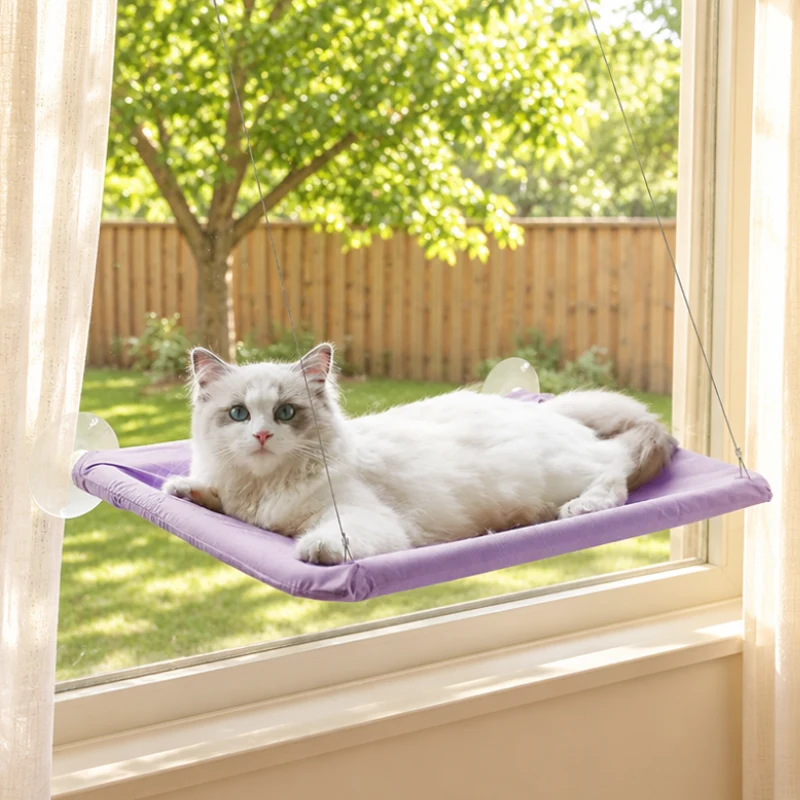 At CozzzypetsCat window hammock
Choosing the right window
Not every window will do. Before installing, check these points.
- Smooth glass. Suction cups only grip a perfectly smooth surface. Avoid textured or frosted glass, or glass covered with a decorative film.
- Glass in good condition. No cracks, no chips. Damaged glass shouldn’t bear any weight.
- A fixed window, ideally. A pane that doesn’t open is best. On a sliding or casement window that’s opened often, the suction cups are exposed to vibration and come loose sooner.
- Never on a screen. It holds nothing and can give way under a cat’s weight.
- A good view. A window overlooking a feeder, a tree or the street will be more popular than one facing a wall.
- Sun, but not too much. A south-facing window is perfect in winter. In summer, glass in full sun can get very hot: make sure your cat can move elsewhere and has water nearby.
Look below the window as well. Avoid installing the hammock above a hot radiator, a delicate plant or furniture with sharp corners.
Respecting the weight limit
Every suction-cup hammock has a weight limit set by the manufacturer. Stick to the limit for your model, and keep two things in mind:
- Your cat’s actual weight. Weigh them if you haven’t recently. Cats sometimes gain weight without anyone noticing.
- Jumping. A cat leaping onto the hammock briefly exerts more force than their weight. That’s why the hammock goes fairly low, where your cat can step onto it rather than jump.
Two cats who want to share the same hammock? Count their combined weight. When in doubt, install one for each.
Installation in 6 steps
1. Clean the glass
This is the most important step. Wash the area with glass cleaner or water and vinegar, then wipe with a clean, lint-free cloth. Dust, grease and soap residue all keep suction cups from gripping.
2. Prepare the suction cups
Wash them in warm soapy water, rinse and dry. If they’ve been bent out of shape by the packaging, soak them in hot water for a few minutes so they regain their form.
3. Install at room temperature
Very cold glass makes suction cups stiff. In winter, install the hammock in the middle of the day, when the glass is less cold, and keep the cups warm until the last moment.
4. Apply the suction cups
Moisten the rim of each cup very lightly: a drop of water is enough. Press firmly in the centre to push the air out, from the middle toward the edges. If your model has levers or tightening screws, lock them.
5. Test before letting your cat climb on
Press on the hammock with your hand, gradually, then set an object on it that weighs about as much as your cat, such as a few books. Leave it in place for several hours, ideally overnight. If nothing has moved, the hammock is ready.
6. Set it at the right height
Install the hammock fairly low, near the windowsill or a piece of furniture that can serve as a step. Your cat will climb on without jumping, and if a suction cup ever lets go, the drop will be short.
The checks to do afterward
A well-installed hammock still needs upkeep.
- Every week: press on each suction cup. If one moves or shows an air bubble, remove it, clean and reapply.
- When the seasons change: big temperature differences between the room and the glass weaken the grip. During cold snaps and heat waves, check more often.
- Once or twice a year: take everything down, wash the glass and the cups, then reinstall and redo the test.
- At the first sign of wear: a suction cup that has yellowed, hardened or cracked should be replaced. Inspect the fabric and cables too.
Helping your cat take to it
Some cats hop in within five minutes; others study it for a week. To encourage yours:
- lay a blanket that carries their scent on the fabric;
- leave a few treats or their favourite toy on it;
- place a chair or shelf right beside it as a step;
- stay close the first few times, without forcing them or placing them on it.
For heavy, senior or cautious cats
A suction-cup hammock isn’t the best option for every cat. A very heavy cat, a senior who doesn’t jump as well or a timid cat will be more comfortable on a stable spot.
- A bed on legs near the window. Our raised hammock bed stands on the floor on steel legs: the same stretched fabric, with no suction cups.
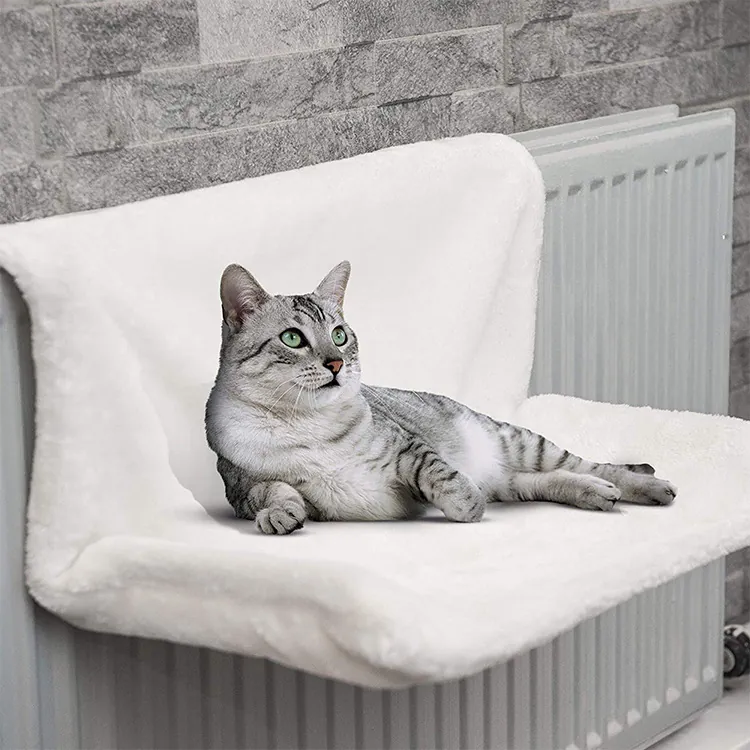
- A framed hammock. The framed cat hammock hooks over a radiator or another sturdy support. It suits cats of 5 kg or less.
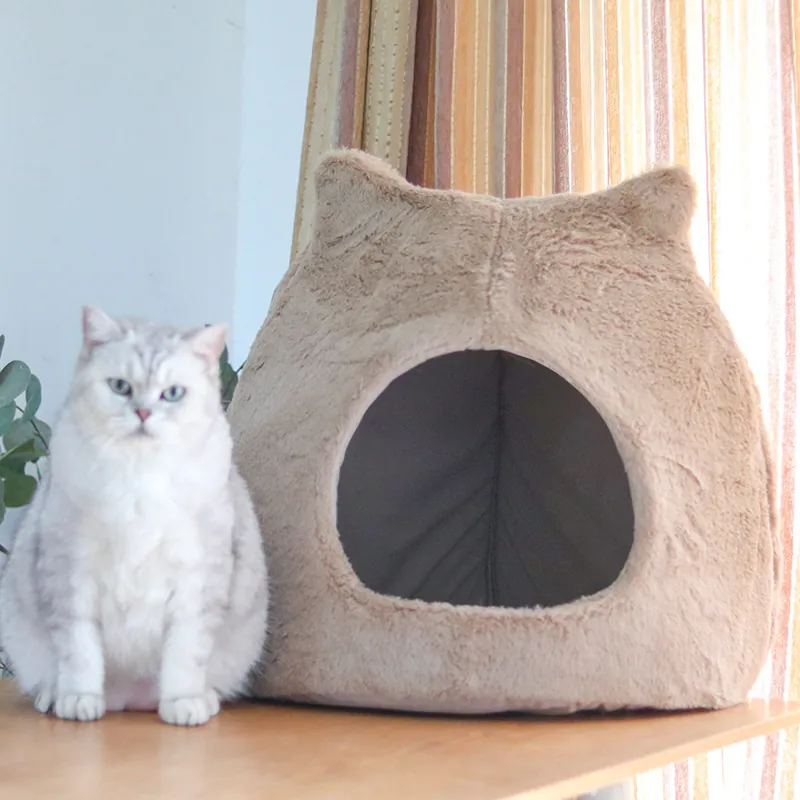
- A cozy bed in the sun. A cat ear cozy bed set on a piece of furniture in front of the window offers the view and the warmth, with a hideaway as a bonus.
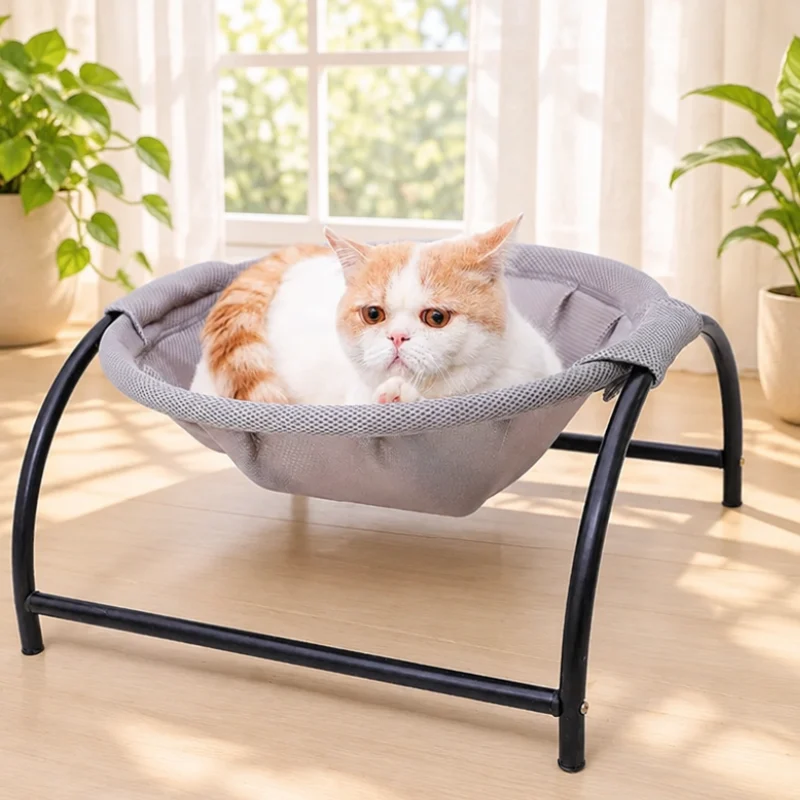 At CozzzypetsRaised hammock bed
 At CozzzypetsFramed cat hammock
Which one should you choose?
- Fit adult cat, fixed window with smooth glass: the suction-cup window hammock.
- Cat of 5 kg or less, radiator or sturdy support near the window: the framed hammock.
- Heavy, senior or timid cat: the raised hammock bed or the cozy bed, set on a stable surface.
- Textured or cracked window, or one you open every day: skip the suction cups and choose a floor option.
For more ideas on setting up your home, see our Apartment cat page and our article on where to put your cat’s bed in winter.
Frequently asked questions
Can the hammock fall?
Yes, if a suction cup is poorly applied, if the glass is dirty or if the weight exceeds the model’s limit. That’s why cleaning, the weight test and the weekly check matter. Installing the hammock fairly low also limits the consequences if it ever comes loose.
Do suction cups hold in winter?
Yes, but cold makes them stiffer and temperature swings weaken the grip. Apply them to glass at a moderate temperature and check them more often during cold snaps.
My cat is afraid to climb on. What should I do?
Place a chair or shelf right beside it for easy access, put a familiar blanket and a treat on the fabric, and give your cat time. Don’t place them on it by force.
Can I install a hammock on a double-pane window?
Yes. The suction cups grip the inner pane, however many panes there are, as long as the surface is smooth, clean and in good condition.
How high should the hammock be?
Low enough for your cat to step onto it from the windowsill, a piece of furniture or a shelf, without having to jump from a height. A low position is safer and more inviting.